
Life on the other side
Modern medicine has transformed heart attack survival rates. A new research centre is focused on helping people live well afterwards
In the late 1980s, more than one in three Australian men who suffered a heart attack were dead within a month. Today, it is closer to one in seven. The vastly better survival rate is one of the great success stories of modern medicine, driven by advances in prevention, emergency treatment, surgery and medication. But more survivors mean more people living with the consequences of heart disease – and that’s a problem healthcare has been slower to address.
Bond University’s Professor Julie Redfern AM first noticed the gap early in her career when she was working as a physiotherapist in a cardiac rehabilitation program at a Sydney hospital.
Patients would come in twice a week for exercise and education, learning how to get back on their feet. But after eight weeks, they were largely on their own – despite the fact a heart attack had left them with a lifelong condition that made them 10 times more likely to have another one.
“I remember thinking to myself, hang on a minute, what happens after the eight weeks?” Julie says.
“Are we really setting people up for lifelong health?”
There was another problem. Many heart attack survivors didn’t attend rehabilitation at all.
Julie went on to complete her PhD on why people didn't attend traditional cardiac rehabilitation and exploring ways to give them more choice in how they managed their health.
More than two decades later, that early work has culminated in the establishment of the world’s first research centre dedicated to helping people live well after a heart attack.
The contrast with the ongoing care available to people recovering from cancer is striking.
Cancer survivorship has become an established field, with dedicated research, models of care and a well-developed charity and support network.
“What the cancer fraternity has done really well is thinking, how can we help make sure we’re supporting those survivors to live their best lives after their treatment?” Julie says.
“I actually think there’s more empathy that comes with cancer compared to a heart attack.
“After a heart attack, people tend to just get on with it.”
A new Heart Disease Survivorship Research Centre at Bond University aims to change how people are supported after a heart attack, shifting the focus beyond survival to long-term health and wellbeing.
The centre is being backed by $3 million in funding from the National Health and Medical Research Council’s Centres of Research Excellence program.
Julie envisages the centre looking at different ways of delivering care, from more flexible forms of rehabilitation to longer-term approaches that help people maintain their cardiovascular health.
Those living with heart disease will be central to the research, helping identify what gets in the way of managing life after a heart attack, and what kinds of support might actually work.
It could also mean recognising that not everyone wants or needs the same kind of support.
“There are all sorts of barriers,” Julie says.
“Different people want to be supported in different ways.”
One of the first challenges will be understanding the size and shape of the problem.
The field lacks the data and statistics that have helped establish survivorship as a recognised area of cancer care.
“This sounds dry but it’s very important – we need some numbers,” Julie says. “We need statistics and data.”
“Different people want to be supported in different ways.”
For Julie, there is something personal about building this on the Gold Coast.
The keen surf lifesaver moved to the Coast for family, the climate, and the sense of opportunity the city offered, taking up the role of Director of the Institute for Evidence-Based Healthcare (IEBH) at Bond University.
Still, her move from the University of Sydney came with some uncertainty.
Could she attract the people she needed and build research with national and international ambitions on the Gold Coast?
Her time at IEBH – and now the establishment of the centre – has provided the answer.
Strong research, she says, attracts talented people.
“When good things are happening, people want to be part of it.”
At the new centre, her fellow Chief Investigator will be Bond’s Executive Dean of Health Sciences & Medicine, Professor Nick Zwar, with
Associate Investigators Professor Shane Hearne and Assistant Professor Darryn Marks.
Julie is still asking herself the same question from all those years ago in a Sydney hospital: what happens after the eight weeks?
The difference now is, she has the resources, the team and the mandate to find an answer.
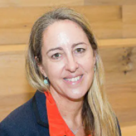
Prof Julie Redfern

Prof Shane Hearn

Dr Darryn Marks
Original thinking direct to your inbox

Stories from Bond