
Bond University is establishing the world’s first research centre dedicated to helping people live well after a heart attack.
The Heart Disease Survivorship Research Centre will examine how healthcare can better support the growing number of people living with the long-term effects of cardiovascular disease.
The new centre is being backed by $3 million in funding from the National Health and Medical Research Council’s Centres of Research Excellence program.
Bond was the only Queensland research institution to secure a grant from 23 applications statewide.
Heart disease has been transformed from an often-fatal event into a condition many people live with for years.
In Australia, the death rate from coronary heart disease has fallen by more than 80 per cent since 1980, driven by a combination of reduced risk factors and advances in medicine and surgery.
But heart attack survivors face a much higher risk of having another heart attack, making support beyond the initial hospital treatment essential.
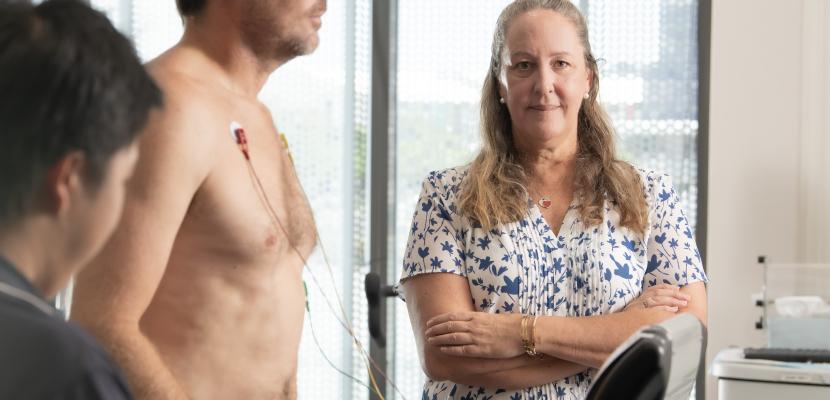
Bond Professor Julie Redfern AM, who will lead the centre, said people could appear to have recovered while still facing significant health risks.
“You can have a heart attack today, and you essentially may look and feel quite similar tomorrow,” Professor Redfern said.
“But once you’ve had one, you’re 10 times more likely to have another one.”
The current model for cardiac rehabilitation involves twice-weekly exercise and education sessions over eight weeks, but many people do not participate.
Professor Redfern, the Director of Bond’s Institute for Evidence-Based Healthcare, said the model was not designed for the long-term needs of a growing population living with heart disease.
“We’ve got an ageing population,” she said.
“How are we going to help all these people? It’s not going to work via this eight-week, twice-a-week approach.”
The centre will take lessons from cancer research, where survivorship has become an established field focused on life after treatment.
People living with heart disease can face depression, anxiety, medication side effects and fear of another heart attack, while some do not realise they still have a chronic condition requiring ongoing management.
Professor Redfern said heart attack survivors would play a central role in the research, helping identify the challenges they face and the support they need.
The centre will focus on developing more flexible models of care, strengthening lifelong cardiovascular health and improving access to support.
Its work will also contribute to an international push to reform cardiac rehabilitation, with collaborators including researchers in Glasgow and the World Heart Federation.
The ultimate goal is to shift the focus from surviving a heart attack to helping people live their best lives afterwards.
Bond University Vice Chancellor and President, Professor Tim Brailsford, said the new research program could transform the way people are supported after a heart attack.
“This new research program has the potential to make such a positive impact on thousands of lives – it is not only life-changing but life-saving,” Professor Brailsford said.
“Cardiac rehabilitation needs more than a short-term focus, with a more holistic approach to help patient-survivors navigate a lifelong trauma.
“The significance of the research has been recognised through the award of one of the nation’s most prestigious multi-year grants from the NHMRC.
“Julie deserves so much credit and accolades.
“She has committed much of her career to lifelong comprehensive care of cardiac patients, which will now accelerate in bringing to life the Heart Disease Survivorship Research Centre.”
The centre’s Chief Investigators are Professor Redfern and Professor Nick Zwar, with Associate Investigators Professor Shane Hearne and Assistant Professor Darryn Marks.