For decades, surf lifesavers have measured their impact in rescues and lives saved. Now, Bond University is helping investigate what else the iconic movement gives back to Australian communities.
Two PhD scholarships are putting that question under the microscope, with research examining the social value of surf lifesaving and the health and well-being of the volunteers who keep it running.
The work was celebrated at Bond’s Stronger Together: Saving Lives, Building Futures morning tea on Tuesday, beside Bond’s collection of Olympic torches in the Hoog Antink Room.
Coinciding with World Heart Day, the event gave the morning an especially fitting pulse, with a panel discussion turning to the health benefits of volunteering and the Bondies who contribute to SLSA as volunteers, athletes and researchers.
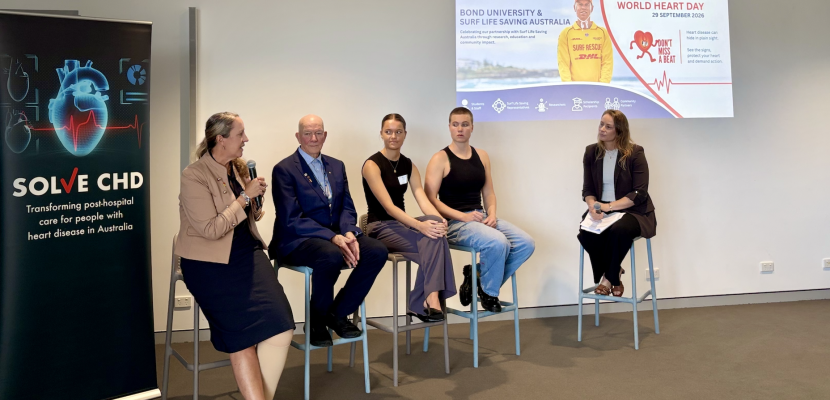
The panel was led by Bond Journalism student and surf lifesaver Bonnie Hancock, with Professor Julie Redfern – Director of the event’s sponsor, Bond’s Institute for Evidence-Based Healthcare – first to the microphone.
Redfern brings an unusual overlap to the conversation as a leading health researcher with more than 330 scientific papers and a seat on the World Heart Federation board. She was also been named Surf Life Saving NSW Volunteer of the Year in 2024.
“We bring world-class research capability and leadership,’ Redfern said. “We want this partnership to be more than supporting athletes, which is very important, but also thinking about research as a pathway to putting organisations like surf lifesaving on the international stage.”
For former Surf Life Saving Australia president Graham Ford AO, measuring that impact is now at the heart of a PhD.
Ford is one of the recipients of the new scholarships and, after more than three decades volunteering at Bronte Surf Life Saving Club, he is investigating what surf lifesaving contributes beyond the rescues.
“How do we measure this community impact? We have to go down deeper - research the value and try to determine what that social capital is,” he said.
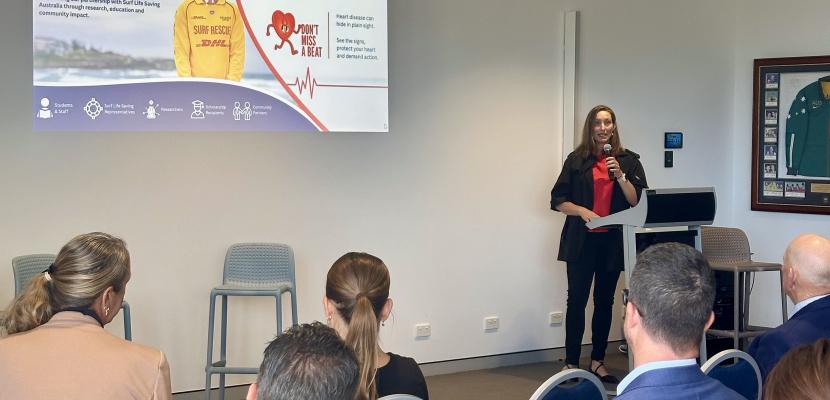
For SLSA National Research Manager Dr Jaz Lawes, that is where the relationship with Bond University becomes critical.
“We need your brains, your help, your guidance,” Lawes said.
“Keeping Australians safe around our coastline is not something that can be achieved by one organisation alone. It requires cooperation and partnerships between communities, volunteers, governments, industry, and, importantly, academia.”
The partnership is creating opportunities for students to experience the organisation from the inside. Final-semester Bachelor of Sports Management student Sofie Hayes gained industry experience working with SLSA as an events intern at the Australian Surf Life Saving Championships at Kirra.
“It just helped me picture where I could be working when I do finish my degree,” Hayes said.
For Bond Commerce student and ADCO Sports Excellence Scholar Jasmine Rayward, the relationship between study, elite sport and surf lifesaving is even closer.
A multiple-time Australian representative across surf lifesaving, kayaking, ocean ski racing and open-water swimming, Rayward competes in the Iron Series while continuing to volunteer as a lifesaver.
“If you watch the Iron Series, all of us are dedicating at least 25 hours of our time, outside of training, to volunteer,” she said. “We’re a lifesaver on the beach.”
That intersection of elite competition and community is also part of what surf lifesaving is taking to its Olympic ambitions, with the sport now on the shortlist for Brisbane 2032.
“The bid is built around what makes us different, our athletes compete, they train, and they’re volunteers to perform rescues,” Ford said.
“It’s a humanitarian element.”
For a partnership that began with the shared strengths of a university and a national lifesaving organisation, those ambitions now extend to quantifying the value of volunteers, creating pathways for students and athletes, and building the evidence that could shape the future of surf lifesaving.