
Knowledge and ideas circulate freely at international conferences but so do germs carried from abroad on mobile phones, a new study shows.
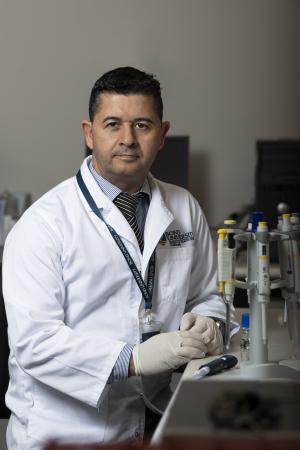
Lead author Dr Lotti Tajouri of Bond University says the data builds a case that international travellers' phones should be decontaminated at ports of entry to protect native plants and animals, agriculture and public health.
For the study, researchers swabbed 20 phones belonging to attendees at a world conference for doctors in Sydney in 2023.
The samples underwent DNA analysis that revealed 2204 microbes on the devices, including 882 bacteria, 1229 viruses, 88 fungi, and 5 single-celled protists.
Among the microbes present on the surface of the mobile phones were antibiotic-resistant bacteria including Staphylococcus aureus, known for causing infections in hospitals, and Pantoea stewartii which affects crops and can also cause septicaemia in rare native Australian parrots.
Dr Tajouri, an Associate Professor of molecular genetics, said although the sample size of 20 phones was small, the findings should be a red flag to the Australian biosecurity system.
“The study demonstrates large numbers of microbes are being introduced to Australia via the microbial-contaminated mobile phones of travellers, posing potential threats to local ecosystems, agriculture and public health,” Dr Tajouri said.
“Take only the presence of antibiotic-resistant bacteria on the phones of international travellers. This raises concerns about the rapid spread of infections and resistance genes with modern transport.
“This surely can complicate efforts to control and treat infectious diseases and contribute to the global issue of antimicrobial resistance.”
Globally there were almost 5 million deaths associated with bacterial antimicrobial resistance in 2019 and the UN expects this to rise to 10 million deaths in 2050.
Australian native plants and agricultural crops are also at risk, Dr Tajouri said.
A fungus detected on one phone, Fusarium solani, is similar to Fusarium euwallaceae which is associated with the polyphagous shot hole borer, first found in Australia three years ago and spreading in Western Australia.
The borers have a symbiotic relationship with the fungi and can kill a tree in two years, raising fears native forests and agricultural crops could be wiped out in Australia.
“There is a clear argument to be made that international travellers’ phones should be decontaminated upon arrival to Australia, in addition to existing biosecurity measures,” Dr Tajouri said.
“Mobile phones act as contaminated mobile petri dishes, yet they are crossing borders without scrutiny.
“Protecting our biodiversity and reducing the spread of superbugs is critical not only for the economy but for our national security.”
By extrapolating the results out to account for 6.8 million arrivals into Australia between January and October 2023, the study’s authors estimate 749.2 million microbes may have been introduced to Australia in 2022 via mobile phones.
“Not all these microbes are harmful of course, but the odds that pathogenic microbes may found a potential pathway of entry into Australia is high with millions of visitors,” Dr Tajouri said.
The phones in the study were volunteered by attendees at the World Organization of Family Doctors (WONCA) World Conference.
The phone owners hailed from North and South America, Europe, southern Africa, the Middle East, upper and lower Asia, Southeast Asia, Australia and Oceania.
Dr Tajouri has previously produced research supporting a theory that the international portability of mobile phones may have hastened the spread of COVID-19 between countries.