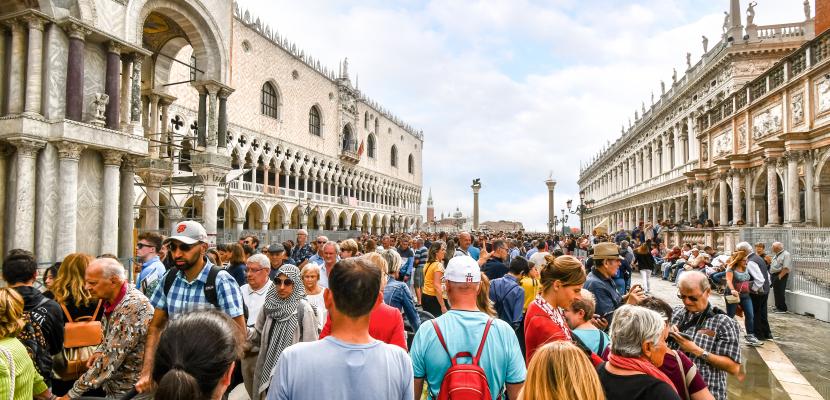
Top tourist destinations should monitor civic participation as an early warning sign of overtourism, a Bond University researcher says.
The study examined visitor hotspots including Venice, Florence, Rome and Milan between 2009 and 2023.
Researchers measured community life by creating an index tracking volunteering, involvement in local organisations, attendance at cultural events, voter turnout and crime.
The study found declines in community participation were most pronounced in destinations experiencing the highest levels of tourism pressure.
Venice offers one of the clearest examples. The population of its historic centre has fallen from more than 174,000 residents in 1951 to fewer than 50,000, while tourist accommodation has increased.

The researchers argue cities under intense visitor pressure risk becoming places designed primarily for tourists rather than communities built around residents.
One of the study’s authors, Bond University honorary adjunct senior research fellow Edmund Goh, said the findings did not mean tourism inevitably damaged communities.
“Tourism can support jobs, amenities and community life,” Professor Goh said.
“The concern is whether its scale and concentration begin to undermine the community that helps make the destination attractive in the first place.”
Rising visitor numbers are often cited as a metric of success but Professor Goh said the raw numbers revealed little about the health of the communities hosting visitors.
“Visitor numbers and community health should be measured together,” he said.
“Important warning signs include visitor nights growing faster than the resident population, increasing conversion of residential homes to short stays, and declining participation in local organisations or volunteering.
“I would also track resident turnover such as relocating to other suburbs or interstate, access to everyday services, housing stress and residents’ sense of belonging and influence over local decisions.
“The strongest warning is several indicators worsening together over time.”
In Australia, concerns about tourism pressure have emerged in destinations including Byron Bay, Noosa and parts of the Gold Coast, particularly around housing availability, short-term accommodation and infrastructure.
“If permanent households are replaced by rotating short-stay guests, a neighbourhood can lose people who sustain its everyday networks such as volunteers, club members, neighbours and regular participants in local activities,” Professor Goh said.

Residents who move further away may also find it more difficult to participate in community life.
Professor Goh said Australian tourist destinations could learn from the Italian cities by tracking not just how many visitors they attract, but how tourism affects the people who live there.
“The Gold Coast and other cities present a question worth investigating: can residents continue to find housing, maintain local relationships and participate in community life as the visitor economy develops?”
The study Cities under pressure: Tourism intensity and the erosion of social capital in Italy was published in Tourism Management.
It was co-authored by Assistant Professor Filippo Marchesani of University “G. d'Annunzio” Chieti-Pescara, Assistant Professor Stefania Denise Escobar of Catholic University of the Sacred Heart, and Professor Federica Ceci of University “G. d'Annunzio” Chieti-Pescara.