
Country
as care
Marnie is reshaping nature-based therapy for
Indigenous children through culture and connection

Country
as care
Marnie is reshaping nature-based therapy for Indigenous children through culture and connection
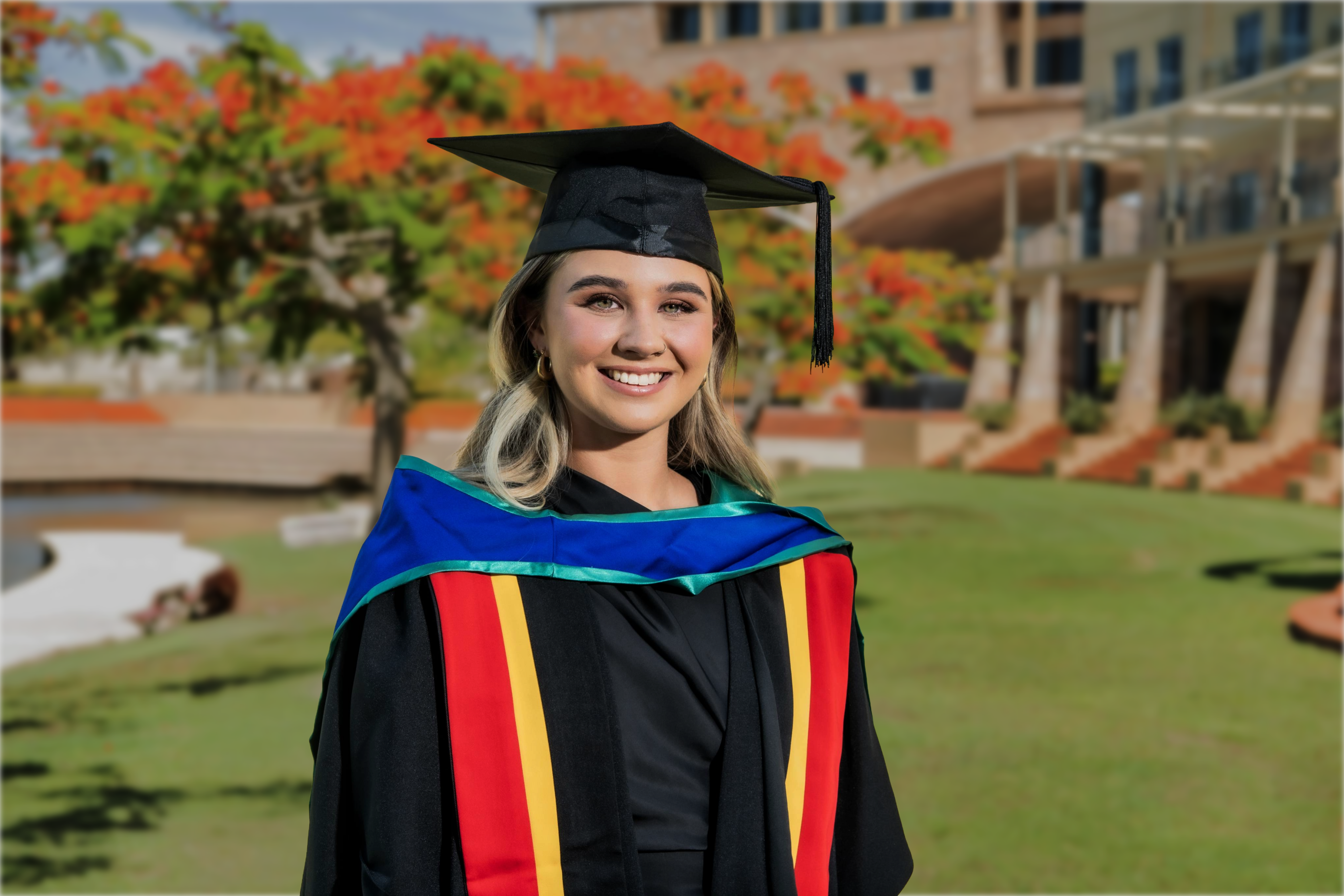
When Marnie Jones returns home to Country, she feels an immediate shift. “Being an Indigenous person, I have my own connection with Country, with the land, and I know how important it is for our health and well-being,” she says.
As a paediatric occupational therapist (OT) and Bond University higher degree by research student, Marnie’s relationship with land is shaping her professional practice, and informing a research project that reimagines how nature-based therapy can be delivered. “When learning more about nature therapy it sparked that, for Indigenous peoples, it's about being on Country, learning about Country, and connecting with our ancestors,” Marnie says.
“I realised I have the lived experience to help make the growing area of nature therapy specific to First Nations children.”
Connection to Country
That realisation now underpins her research at Bond University. Working as a paediatric OT with the Institute for Urban Indigenous Health (IUIH), Marnie sees firsthand how many children are growing up disconnected from their culture.
“Being in the clinics every week, talking to parents, seeing what their priorities are and that there are a lot of kids who don’t know much about their mob or have been displaced from their Country, I’m learning so much,” she says.
Her research responds directly to that gap. In partnership with Elders, community members, and clinicians on Kombumerri Country, Marnie is co-designing play-based, nature-based therapy resources grounded in Indigenous ways of knowing.
“These play-based nature therapies focus on building connection to Country by learning about dreamtime stories and how to care for the land, using concepts relevant to Indigenous culture,” Marnie says.
“The activities target social, cognitive, and gross motor skills, exploring how we regulate our emotions, communicate, and move our bodies through being outside and taking moments for deep listening, really thinking about how our bodies are feeling, and going into a more relaxed state.”
Early findings
Marnie’s research positions therapy as a pathway to strengthening community connection and broader determinants of health often overlooked in conventional practice.
“I completed a narrative review of Indigenous research methodologies and recommendations for researchers when engaging with First Nation communities, then had a yarning circle with the IUIH to discuss the facilitators and barriers of nature therapy within their clinics,” Marnie says.
“These steps set the tone for the co-design of the prototype resources, which I’m now working through feedback on.”
Marnie says learning how to approach the intellectual knowledge of Indigenous communities — the stories they share or decide not to share because they are sacred — is one of the most valuable outcomes of her research.
“The most important things are to ensure you have permissions, and to develop meaningful relationships with the community where they trust you to share their knowledge and deal with it in the correct way,” she says.


Research, practice, and industry collaboration
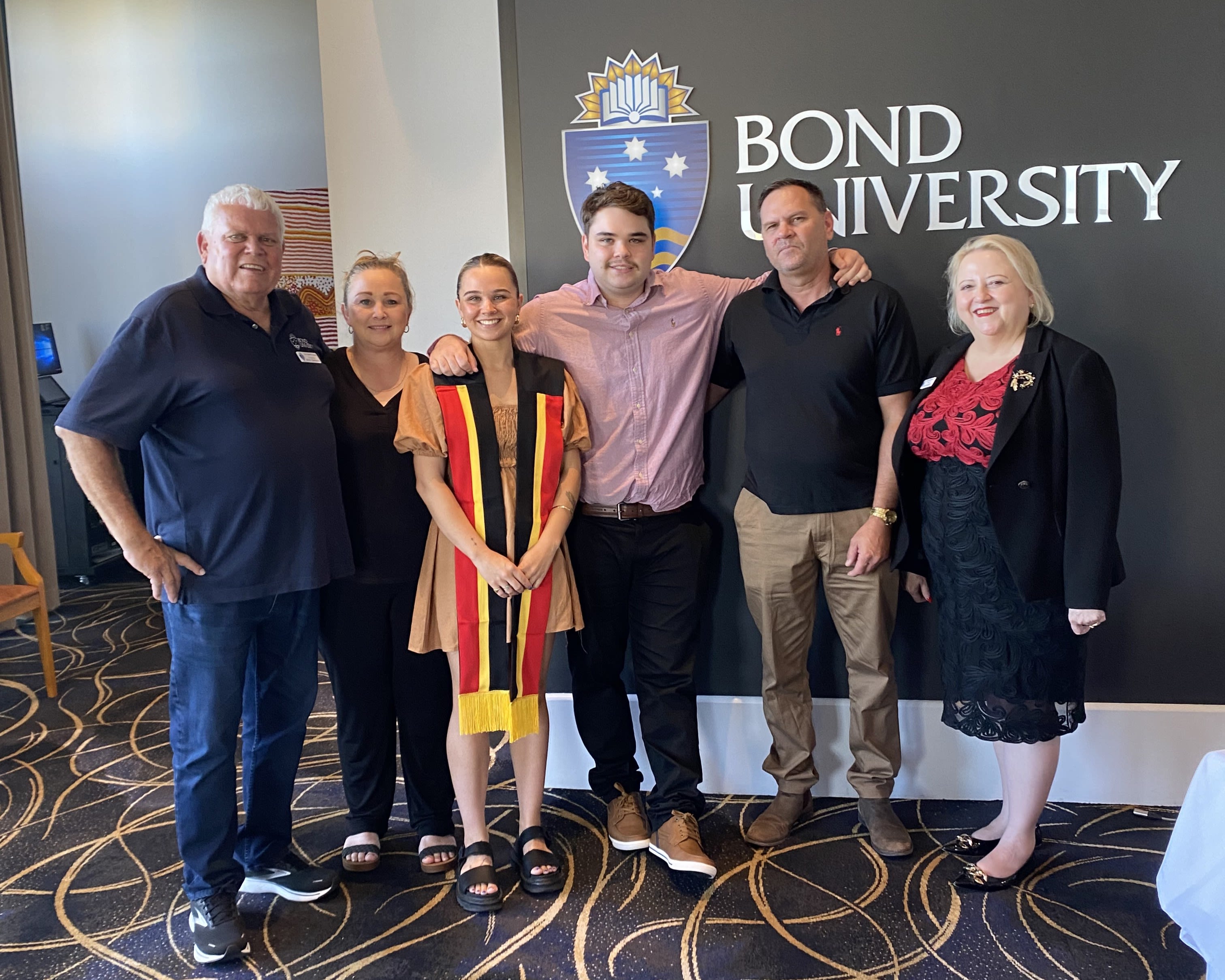
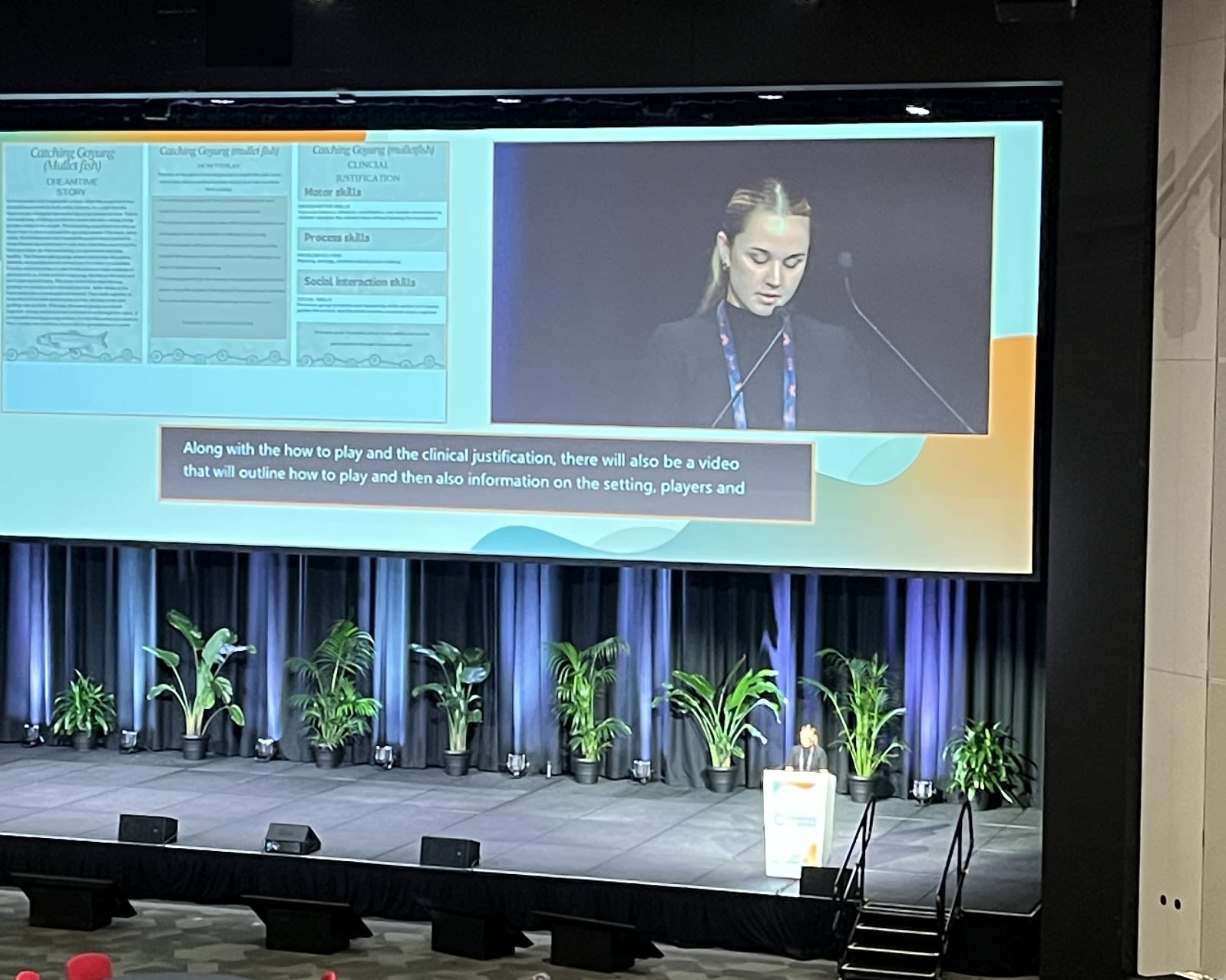
Marnie completed her undergraduate and master's degree at Bond and is now undertaking a Professional Doctorate of Occupational Therapy (OT) — the first of its kind in Australia. Her supervisor, Dr Beth Mozolic-Staunton, says it marks an exciting milestone for both the University and the OT industry.
“Culturally responsive care is a big priority for all professionals within the Australian healthcare system, ensuring culturally appropriate services to First Nations peoples,” Dr Mozolic-Staunton says.
“Marnie’s also been publishing along the way about Indigenous research methodologies, which provides a great example to other academics, students, researchers and clinicians about how to be culturally responsive when working with Indigenous people and co-designing interventions, as well as breaking down terminology of Indigenous research.”
The project has also been supported by Professor or First Nations Health Shane Hearn and Bond University Elder Uncle John Graham, who have provided ideas, insights, and contacts, as well as ongoing support.
Research with real-world impact
Hanna Wunsch, Paediatric Occupational Therapy Clinic Lead at IUIH, says Marnie’s project is already contributing to the ongoing work of Indigenous allied health practitioners.
“We’re excited to use the resources she’s co-created in our clinics. I think they’re going to be an incredible support for families,” says Hanna.
“She’s been navigating multiple systems — working with us, studying at Bond, and collaborating closely with Indigenous community members — and she’s brought all of that together in a powerful way.
“She’s created something that meets research standards, is deeply connected to community, and is genuinely usable in practice. That’s not an easy thing to do.”


Research, practice, and industry collaboration
Marnie completed her undergraduate and master's degree at Bond and is now undertaking a Professional Doctorate of Occupational Therapy (OT) — the first of its kind in Australia. Her supervisor, Dr Beth Mozolic-Staunton, says it marks an exciting milestone for both the University and the OT industry.
“Culturally responsive care is a big priority for all professionals within the Australian healthcare system, ensuring culturally appropriate services to First Nations peoples,” Dr Mozolic-Staunton says.
“Marnie’s also been publishing along the way about Indigenous research methodologies, which provides a great example to other academics, students, researchers and clinicians about how to be culturally responsive when working with Indigenous people and co-designing interventions, as well as breaking down terminology of Indigenous research.”
The project has also been supported by Professor of First Nations Health Shane Hearn and Bond University Elder Uncle John Graham, who have provided ideas, insights, and contacts, as well as ongoing support.

Research with real-world impact
Hanna Wunsch, Paediatric Occupational Therapy Clinic Lead at IUIH, says Marnie’s project is already contributing to the ongoing work of Indigenous allied health practitioners.
“We’re excited to use the resources she’s co-created in our clinics. I think they’re going to be an incredible support for families,” says Hanna.
“She’s been navigating multiple systems — working with us, studying at Bond, and collaborating closely with Indigenous community members — and she’s brought all of that together in a powerful way.
“She’s created something that meets research standards, is deeply connected to community, and is genuinely usable in practice. That’s not an easy thing to do.”

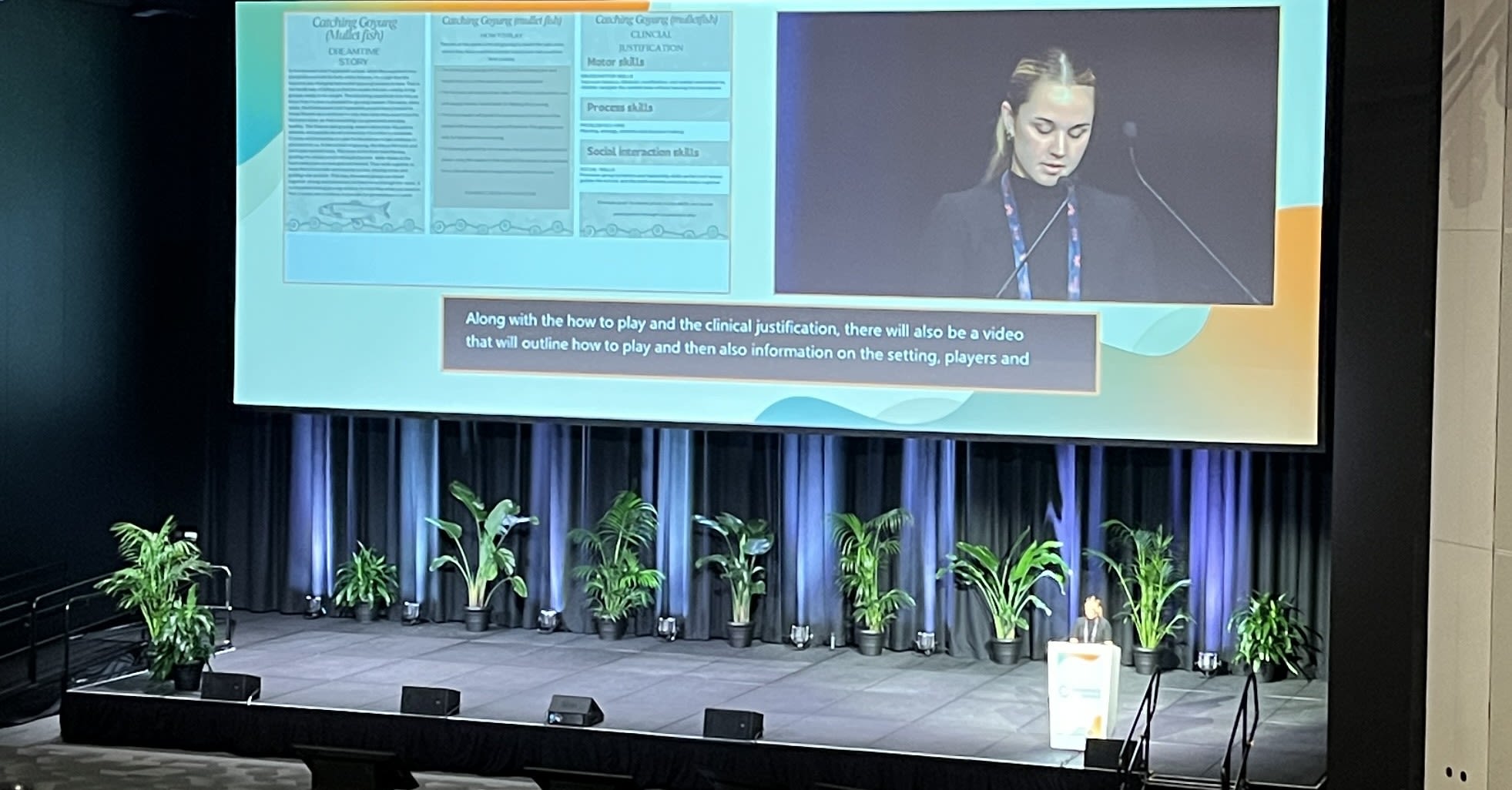
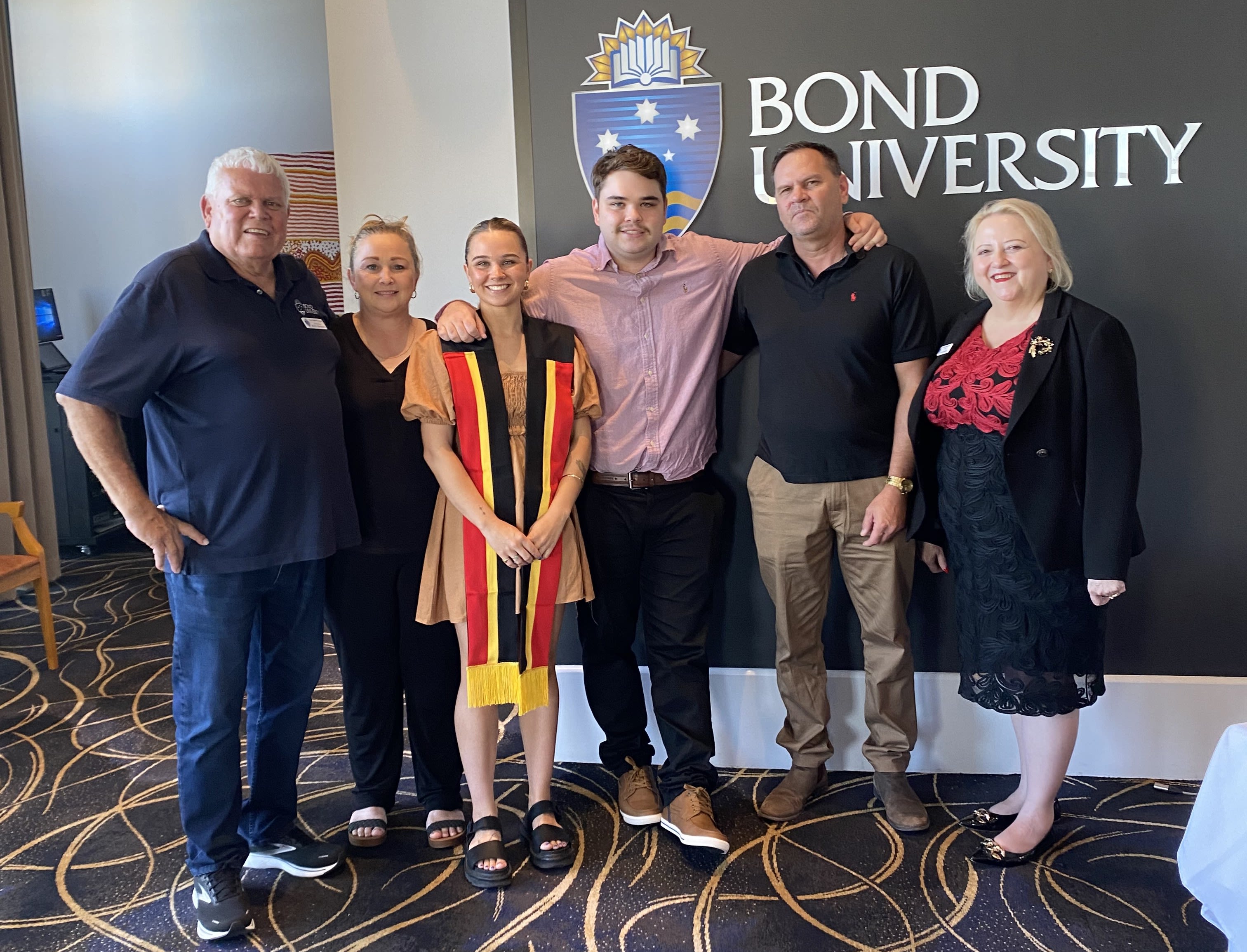
Marnie presenting her doctoral research at the 31st Occupational Therapy Australia conference.
Marnie presenting her doctoral research at the 31st Occupational Therapy Australia conference.
Research at Bond
At Bond University, research is anchored in collaboration and real-world relevance. The University’s research culture is built on close relationships between academics, students, and partners across industry, government and community, ensuring research questions are grounded in real needs and real contexts.
Deputy Provost Research, Professor Michael Kimlin sees this connectivity as one of Bond’s defining strengths.
“Our applied research focus fundamentally shapes the higher degree by research experience, with candidates embedding their research within active professional and policy environments beyond the University,” he says.
“This approach produces graduates who are not only rigorously supervised and well connected, but also equipped with deep industry engagement, enabling them to deliver research that is relevant, impactful, and responsive to real world challenges.”

Original thinking direct to your inbox

Stories from Bond