


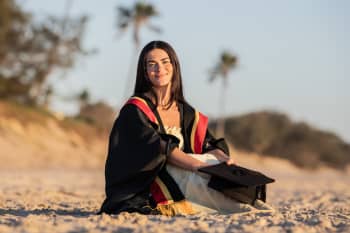
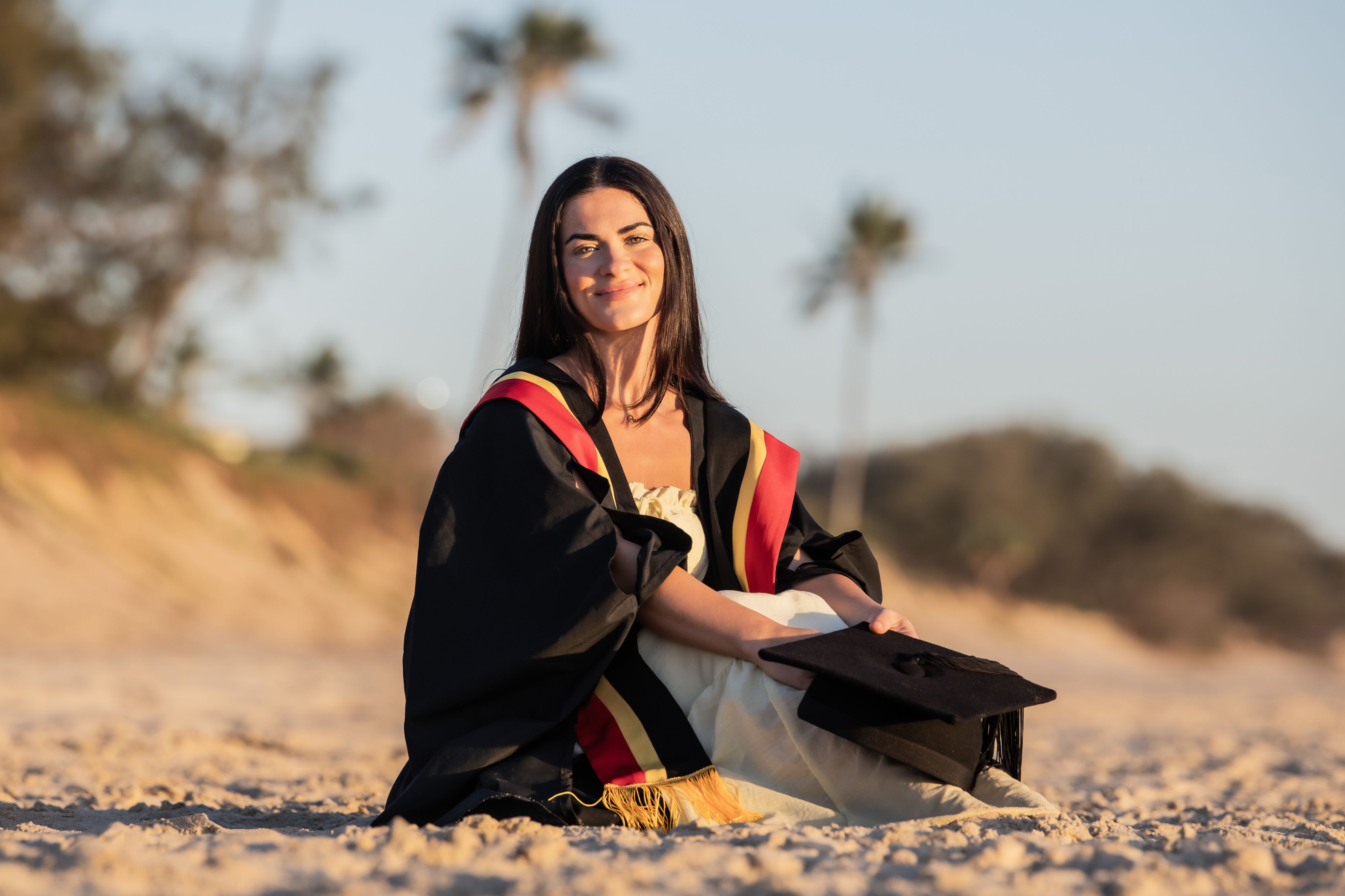
The Kombumerri people have nurtured the Gold Coast for millennia. One of their descendants, Dr Juliette Levinge, will be bringing that same care to patients at the Gold Coast University Hospital.


It’s only natural that goals and perspectives evolve over the four years and eight months of the Bond University Medical Program. Exploring potential specialisations, visiting Arnhem Land, working in clinics in the Solomon Islands and managing the demands of two sequential degrees are bound to spur growth and sharpen focus.
Yet the motivation that first inspired Kombumerri woman Juliette Levinge to pursue medicine has remained as solid as Jellurgal (Burleigh Heads) itself: Giving back to her community. Being able to do so on the Gold Coast is an added bonus. After graduating as Dr Levinge in December 2025, she begins work as a junior doctor at the Gold Coast University Hospital.
“Living and working on Country and staying connected with community is something that’s very important to me, so having the opportunity to begin my career here is wonderful,” Dr Levinge says.

Local roots
One of Bond University’s newest alumni is a descendant of Jenny Graham, a trailblazing Kombumerri elder who lived in the mid-1800s. Growing up, Juliette loved spending time at Jellurgal, deepening her connection to Country and culture. She was later accepted into the high-performing Queensland Academies Health Sciences Campus at Southport.
During a school study tour to the Northern Territory, conversations with doctors highlighted the barriers Indigenous Australians face in accessing culturally safe healthcare – and her ambition to study medicine took hold.
“Throughout my schooling I was motivated to perform well academically because I understood the opportunities it could create for my future, particularly in pursuing a career in health,” Dr Levinge says. “Wanting to make my parents proud and honour the effort they invested in my education has guided me through every step.”
Scholarship support

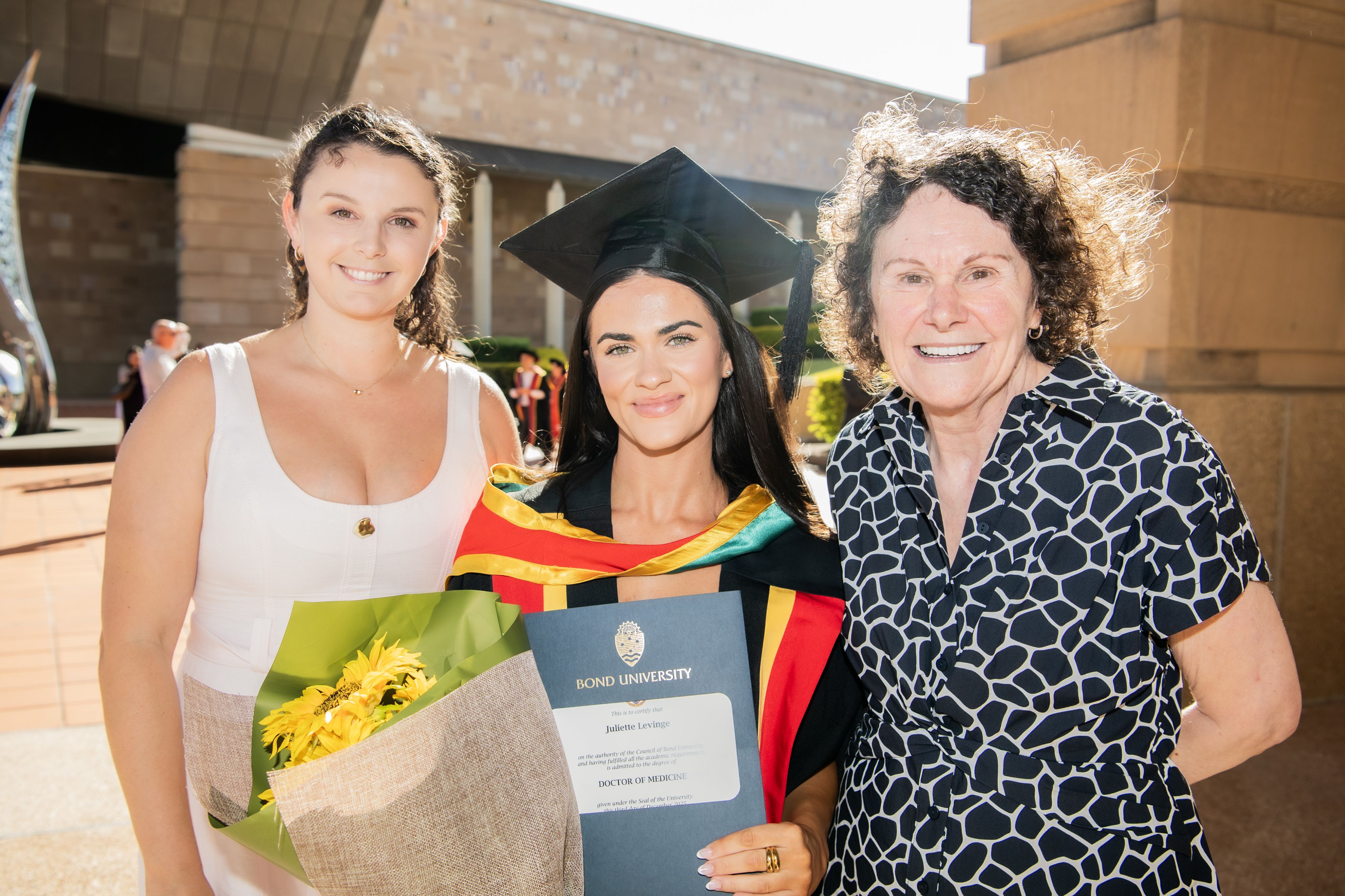
Stephanie Machado Campos, Dr Juliette Levinge and Optical Superstore co-founder Margaret Douglas.
Stephanie Machado Campos, Dr Juliette Levinge and Optical Superstore co-founder Margaret Douglas.
Dr Levinge was a recipient of a Bond University First Nations Medical Scholarship, which was supported by Optical Superstore co-founder Margaret Douglas.
“I would not have achieved what I am doing today without Margaret’s invaluable support and the generous sponsorship from The Optical Superstore,” Dr Levinge says. “This has been life-changing for me.”
At Bond, Dr Levinge took on leadership roles as Indigenous Liaison Officer of Bushfire, a student-run club that creates awareness of rural and Indigenous health. She was also a student representative for the Australian Indigenous Doctors’ Association, advocating for First Nations students and creating opportunities for cultural engagement on campus.
“I aimed to be a strong voice for all First Nations students and to help make sure their experiences, needs, and aspirations were heard and supported,” she says.
Hands-on experience
In 2023, Dr Levinge joined a health-focused trip to East Arnhem Land with the Australian Indigenous Doctors’ Association, visiting local schools and clinics, and spending time on islands such as Galiwin’ku.
“Remote and rural communities need better access to medical services across Australia,” she says. “That experience made me appreciate the healthcare and services available to us living here in Southeast Queensland.”
Earlier this year, Dr Levinge completed a six-week clinical placement in the Solomon Islands as her capstone project – another eye-opening insight into the challenges faced by under-resourced health systems.
Dermatology has since emerged as a particular interest, strengthened by her elective and selective placements and growing professional networks.

Commitment to patients
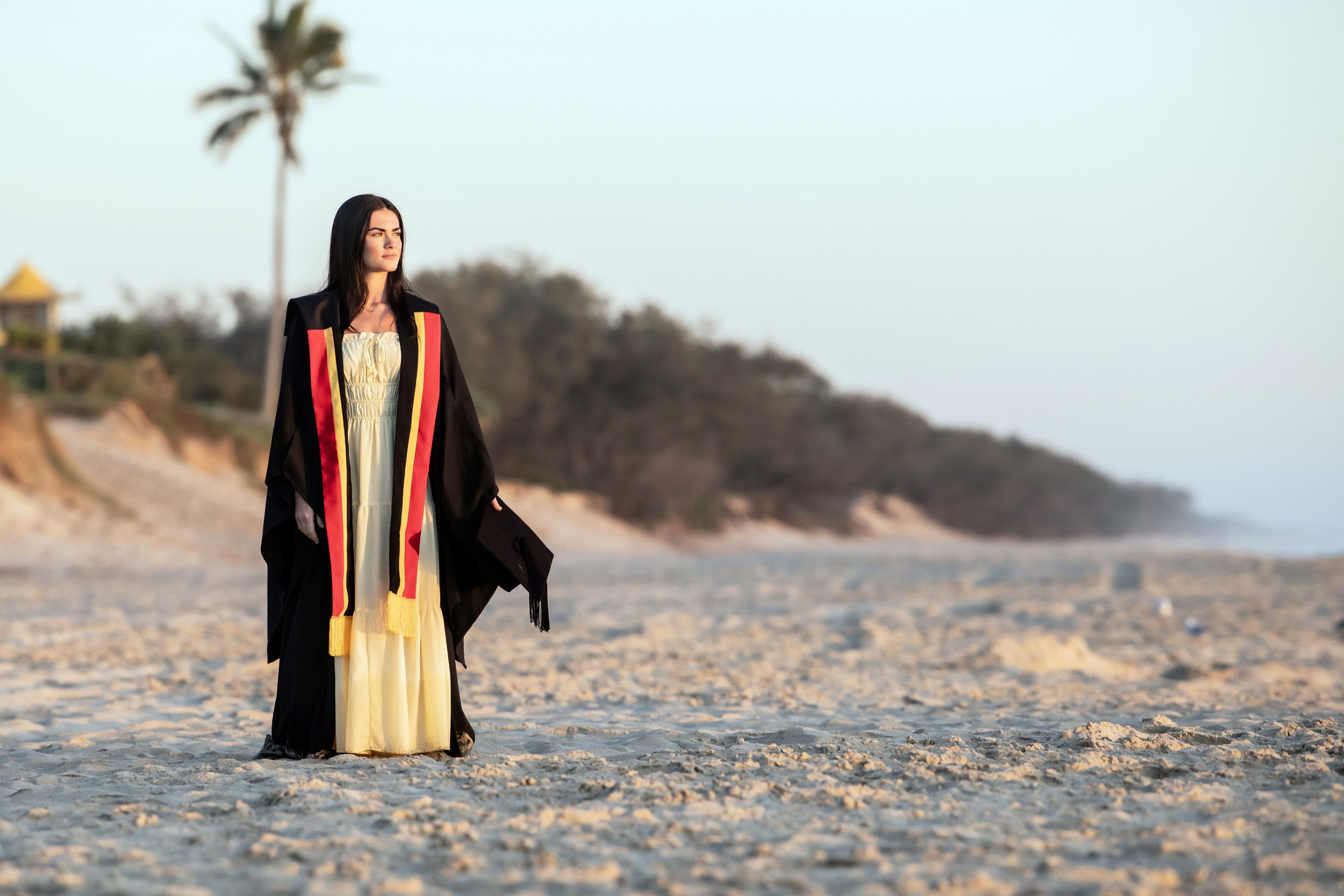
With her cultural identity at the centre of her practice, Dr Levinge is determined to ensure First Nations Australians can access healthcare safely and with dignity.
“Giving back to community as a doctor is why I started this journey in the first place,” she says. “I think my cultural identity has made me a better doctor, centred on the patient. “I want all First Nations Australians to feel culturally safe when seeking healthcare and to have better health outcomes in their communities.”
Applications for the 2026 Bond University First Nations Medical Scholarship are open 8-22 January, 2026. Learn more here.
Published on Thursday, 4 December, 2025.
Original thinking direct to your inbox

Stories from Bond