
Stand
by me
The shared role we all play in reducing intimate partner violence


Intimate partner violence has been recognised as a global public health crisis by the World Health Organization (WHO). It estimates nearly one in four ever-partnered women over the age of 15 has experienced this form of violence, defined as “behavior by an intimate partner or ex-partner that causes physical, sexual, or psychological harm, including physical aggression, sexual coercion, psychological abuse, and controlling behaviors.”
A 2025 Australian study paints a similarly grim picture: nearly half of women, more than 40 per cent of men, and 69 per cent of gender-diverse people have experienced intimate partner violence. What’s more, about 40 per cent have grown up in a domestic violence environment, and 60 per cent have been victims of a form of child maltreatment, described as an act of commission or omission by a parent or caregiver that has caused, or has the potential to cause, harm to a child.


40% of men have experienced intimate partner violence.

Nearly half of women have experienced intimate partner violence.
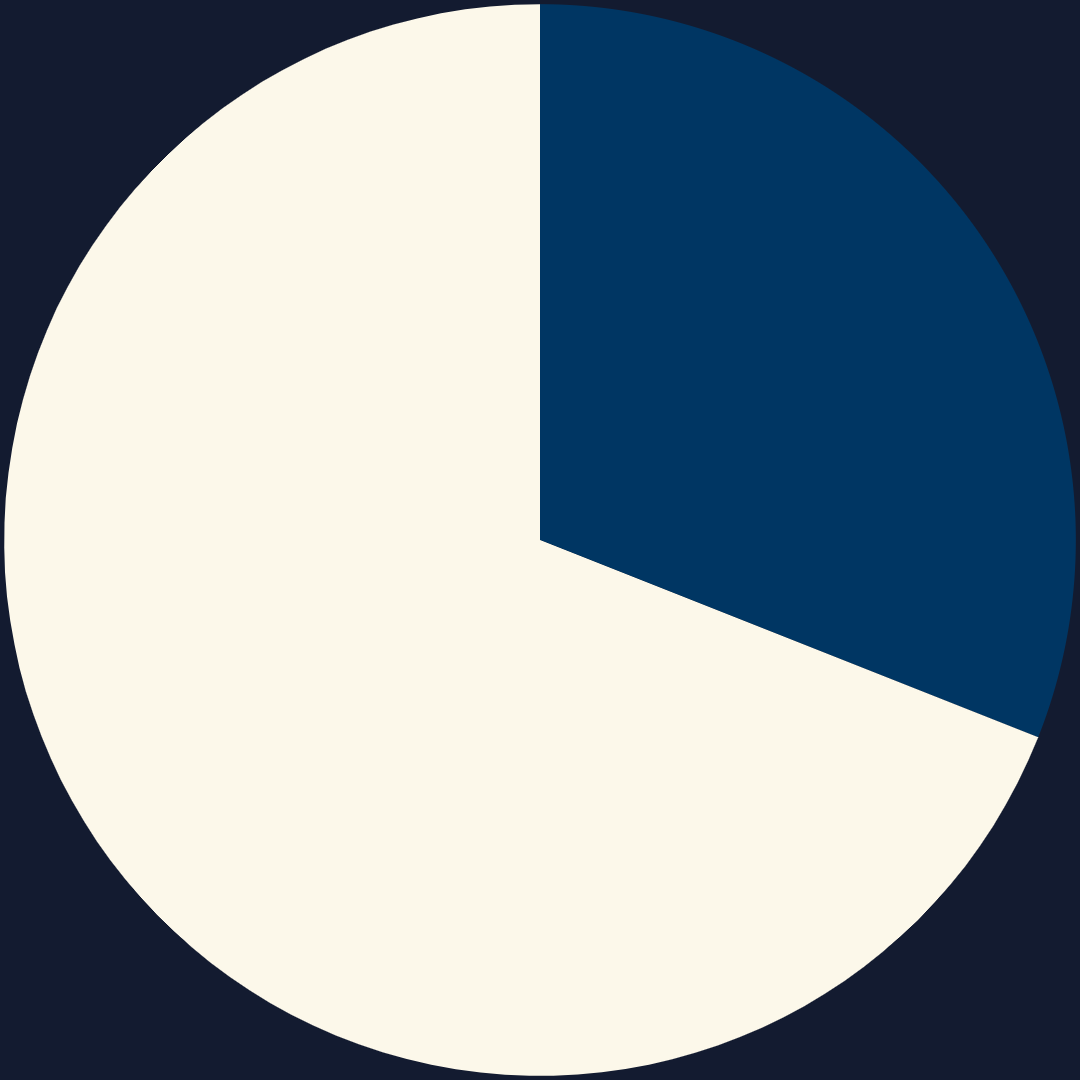
69% of gender-diverse people have experienced intimate partner violence.
A personal journey
As a child, Bond University Assistant Professor Dr Gaelle Brotto hid the psychological scars of intimate partner violence well. A top student and athlete, school and sport became her safe space from the age of seven, while behind closed doors she dealt with the fallout of her mother’s dysfunctional remarriage, following the passing of her own father. While she never spoke the words aloud, she constantly asked herself: “Why is this happening? Why isn’t anyone doing anything?”
It has become her life’s mission to answer those questions, and to develop evidence-based interventions that will help prevent others from living in such volatile environments. Working in Bond’s Faculty of Society & Design, Gaelle is examining criminal behaviour, victimisation patterns, and violence prevention.
She says while there is much emphasis on professional systems and responses, the sheer scale of intimate partner violence requires a collective community approach, with friends, family, neighbours, colleagues, and acquaintances all playing a role in becoming “active” bystanders.
“In the past three years, we've seen an increase in domestic family violence related death, especially of women,” Gaelle says. “As a society, we definitely have more work to do.”


As a child, Bond University Assistant Professor Dr Gaelle Brotto hid the psychological scars of intimate partner violence well. A top student and athlete, school and sport became her safe space from the age of seven, while behind closed doors she dealt with the fallout of her mother’s dysfunctional remarriage, following the passing of her own father. While she never spoke the words aloud, she constantly asked herself: “Why is this happening? Why isn’t anyone doing anything?”
It has become her life’s mission to answer those questions, and to develop evidence-based interventions that will help prevent others from living in such volatile environments. Working in Bond’s Faculty of Society & Design, Gaelle is examining criminal behaviour, victimisation patterns, and violence prevention.
She says while there is much emphasis on professional systems and responses, the sheer scale of intimate partner violence requires a collective community approach, with friends, family, neighbours, colleagues, and acquaintances all playing a role in becoming “active” bystanders.
“In the past three years, we've seen an increase in domestic family violence related death, especially of women,” Gaelle says. “As a society, we definitely have more work to do.”
The bystander effect
The bystander effect is a social psychological phenomenon where people are less likely to act when multiple people witness the same concerning situation, each believing someone else will help.
“Essentially, if there are many people in the room, everyone's going to say, ‘this person's going to jump in, or this person's going to jump in’ and, in the end, no one does anything. This is what the research has shown,” Gaelle says.
There can be many reasons for this, including bystanders not feeling properly equipped, scared, or simply not knowing what to do.
“In encouraging bystander intervention, we apply what we call the five Ds of behaviours, which is really about acknowledging the strategies to recognise the inappropriate behaviours and how to jump in, but it has to be done in a safe manner.
“Everyone is part of the solution. If we call out, or do something when we see it, we can make a difference.”
How you can help
The five Ds provide a practical framework for safe and effective bystander intervention.

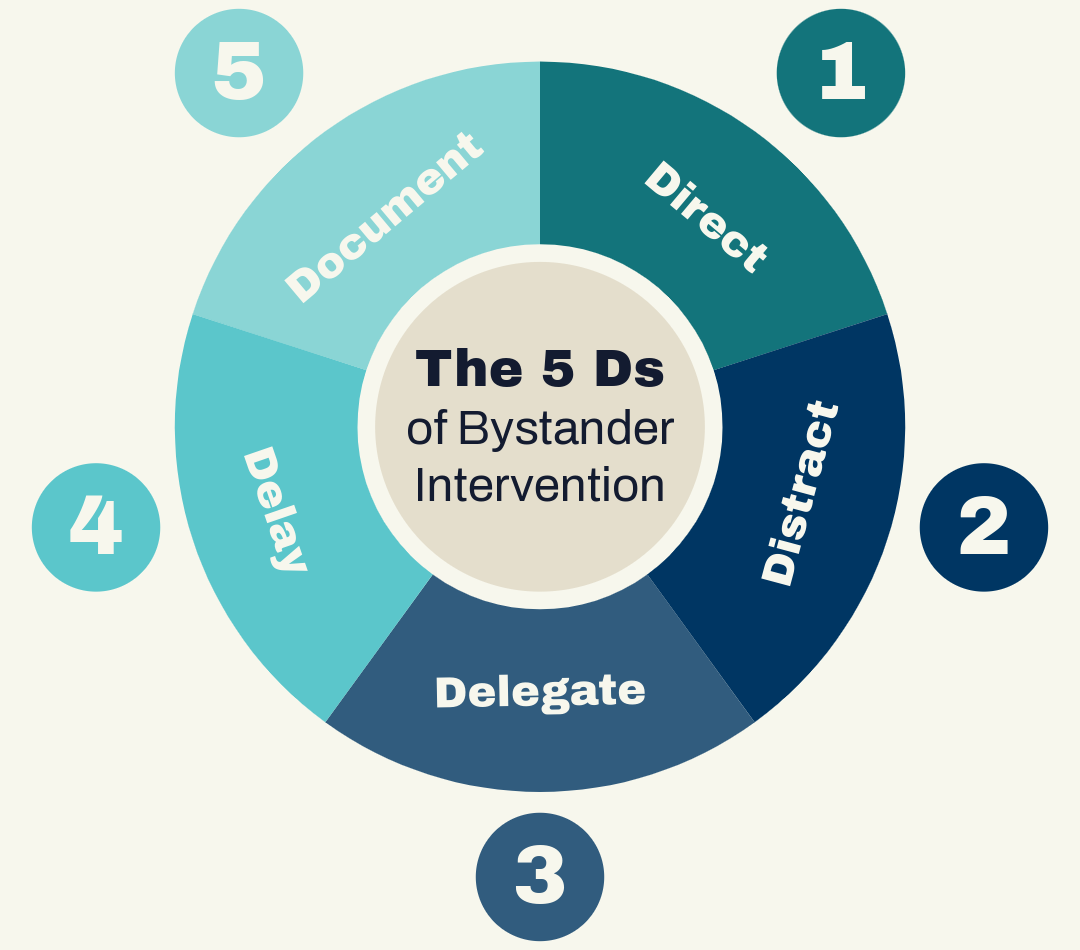
- Direct intervention: speak up in the moment when it is safe to do so
- Distract: create an interruption to defuse the situation without direct confrontation
- Delegate: seek help from someone better positioned to intervene
- Delay: check in with the person after the incident has passed
- Document: record evidence of abuse when it is safe to do so
There are several ways to intervene, depending on what feels safe and appropriate in the moment.
“If you feel safe and confident you can directly intervene by, for instance, saying ‘that is not cool to say’, therefore stopping the negative interaction,” Gaelle says. “You can distract, whether you distract the victim or offender, by saying something like ‘can you please give me the time’, which has been shown to work.”
If direct action does not feel right, delegating to a friend or colleague who is better placed to help is equally valid. Delaying is also an option: checking in after the fact or returning to a friend who has caused harm and saying clearly that what happened was not acceptable.
“But I think the most important is making sure we document everything we see because it’s evidence for victim-survivors,” Gaelle explains.
With colleague Dr Cher McGillivray, Gaelle has produced a video for Bond staff and students highlighting the bystander effect and safe interventions. The University has established an anonymous reporting mechanism to create a clear pathway to safely intervene, and Gaelle has given guest lectures to raise awareness. It’s part of the University’s response to the National Higher Education Code to Prevent and Respond to Gender Based Violence.
The bystander effect
The bystander effect is a social psychological phenomenon where people are less likely to act when multiple people witness the same concerning situation, each believing someone else will help.
“Essentially, if there are many people in the room, everyone's going to say, ‘this person's going to jump in, or this person's going to jump in’ and, in the end, no one does anything. This is what the research has shown,” Gaelle says.
There can be many reasons for this, including bystanders not feeling properly equipped, scared, or simply not knowing what to do.
“In encouraging bystander intervention, we apply what we call the five Ds of behaviours, which is really about acknowledging the strategies to recognise the inappropriate behaviours and how to jump in, but it has to be done in a safe manner.
“Everyone is part of the solution. If we call out, or do something when we see it, we can make a difference.”
How you can help
The five Ds provide a practical framework for safe and effective bystander intervention.
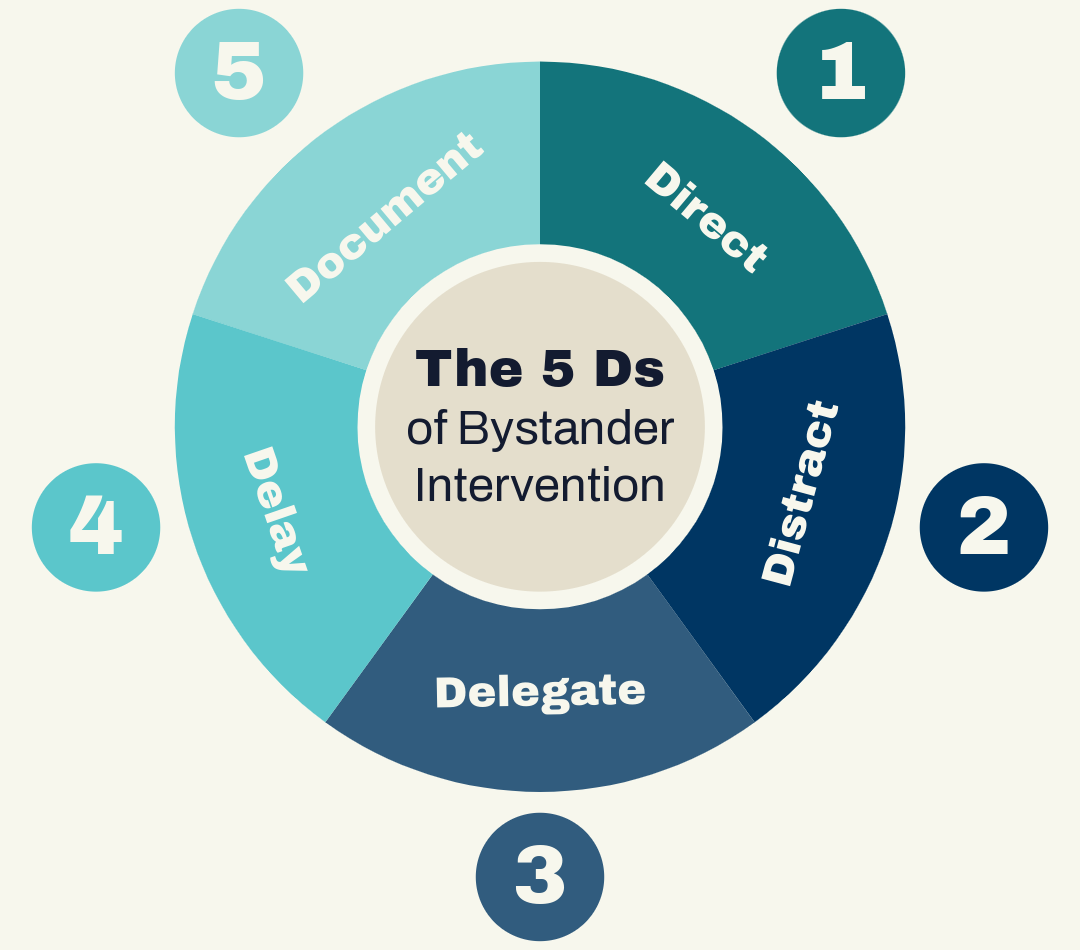
- Direct intervention: speak up in the moment when it is safe to do so
- Distract: create an interruption to defuse the situation without direct confrontation
- Delegate: seek help from someone better positioned to intervene
- Delay: check in with the person after the incident has passed
- Document: record evidence of abuse when it is safe to do so
There are several ways to intervene, depending on what feels safe and appropriate in the moment.
“If you feel safe and confident you can directly intervene by, for instance, saying ‘that is not cool to say’, therefore stopping the negative interaction,” Gaelle says. “You can distract, whether you distract the victim or offender, by saying something like ‘can you please give me the time’, which has been shown to work.”
If direct action does not feel right, delegating to a friend or colleague who is better placed to help is equally valid. Delaying is also an option: checking in after the fact or returning to a friend who has caused harm and saying clearly that what happened was not acceptable.
“But I think the most important is making sure we document everything we see because it’s evidence for victim-survivors,” Gaelle explains.
With colleague Dr Cher McGillivray, Gaelle has produced a video for Bond staff and students highlighting the bystander effect and safe interventions. The University has established an anonymous reporting mechanism to create a clear pathway to safely intervene, and Gaelle has given guest lectures to raise awareness. It’s part of the University’s response to the National Higher Education Code to Prevent and Respond to Gender Based Violence.
Safe intervention
Safely intervening is paramount. Gaelle cautions bystanders must understand the impacts of coercive control, a strategic pattern of behaviour to dominate, isolate and strip away autonomy. Well-meaning interventions, without this understanding, can inadvertently increase danger or escalate violence.
That is why it is important the community response extends beyond individual situations to creating the cultural conditions that ensure inappropriate behaviour of any kind is simply not tolerated or normalised. Gaelle acknowledges there is a tendency not to speak up. “If it's an inappropriate joke for example, you're more likely to laugh than say ‘I don't think this was cool’.”
Gaelle, and colleague Associate Professor Stuart Murray, are collaborating with Be There Group on an initiative recognising shared accountability for calling out inappropriate behaviour, including sexual violence, sexual harassment, and bullying.
They are also evaluating the impact of bystander training on empowering people to safely step in, and improving workplace culture, adhering to Safe Work Australia standards and embedding Sex Discrimination Act positive duty legislative requirements.
“On an Australian level, there has been a call, especially in male dominated areas like the mining industry, for more training,” Gaelle says.
“We are evaluating and doing pre-surveys on the understanding of the prevalence of any form of gender-based violence, but also the understanding of what a bystander is and so on.
“Most of the time, knowledge is very low or non-existent. The purpose is, after three months and six months follow-up, starting to see ‘I've recognised those types of behaviours, and I felt confident to report it to my manager or intervene when I felt safe to do so’.”
The research is clear, the strategies are within reach, and the need has never been greater, Gaelle says.
“In the end, it comes down to one simple choice: be someone who does something.”

Original thinking direct to your inbox

Stories from Bond