
Double down
After conquering two world titles, Kye Robinson comes home to crush the Gold Coast T100

Double down
After conquering two
world titles, Kye comes
home to crush the
Gold Coast T100

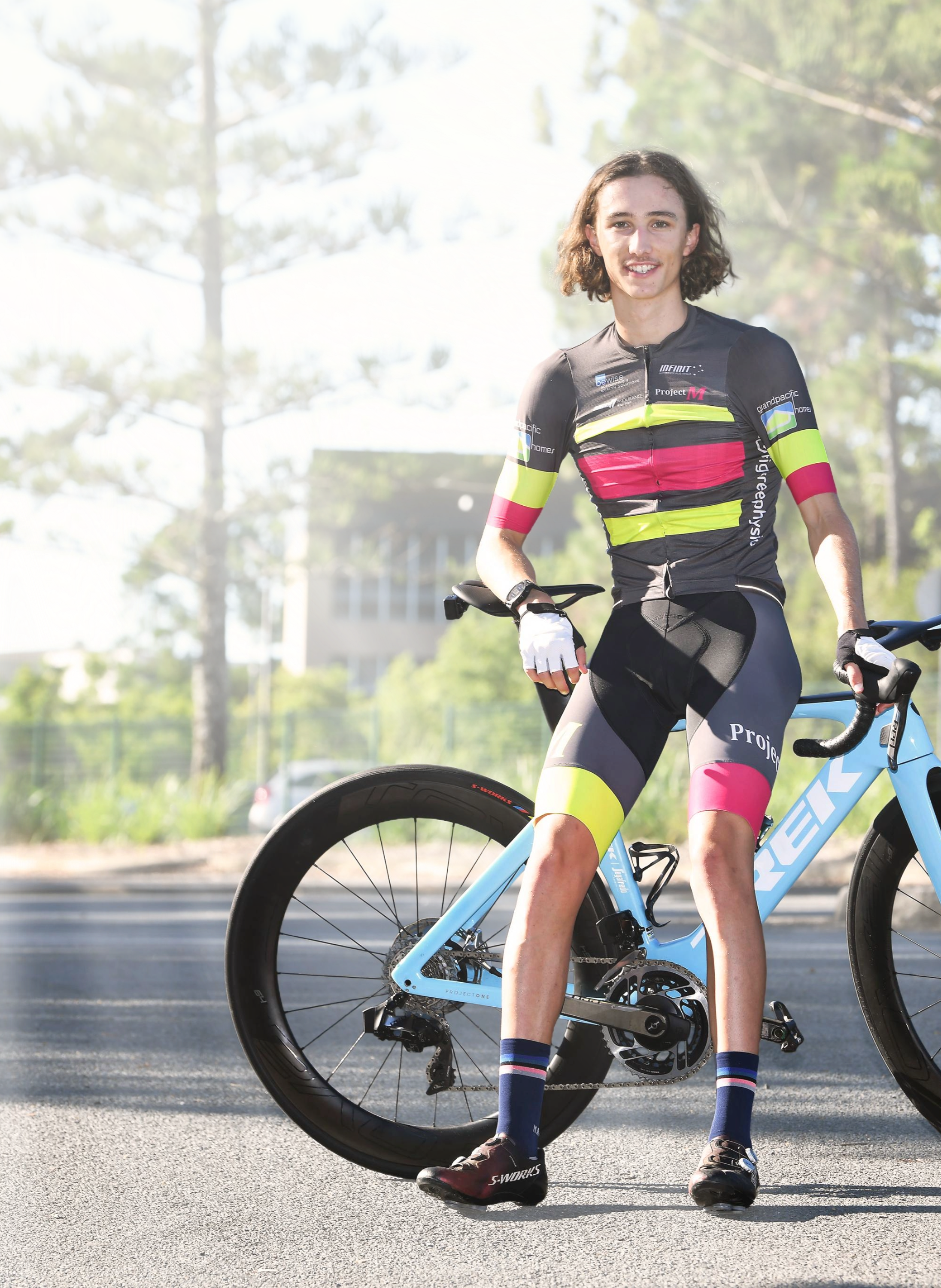
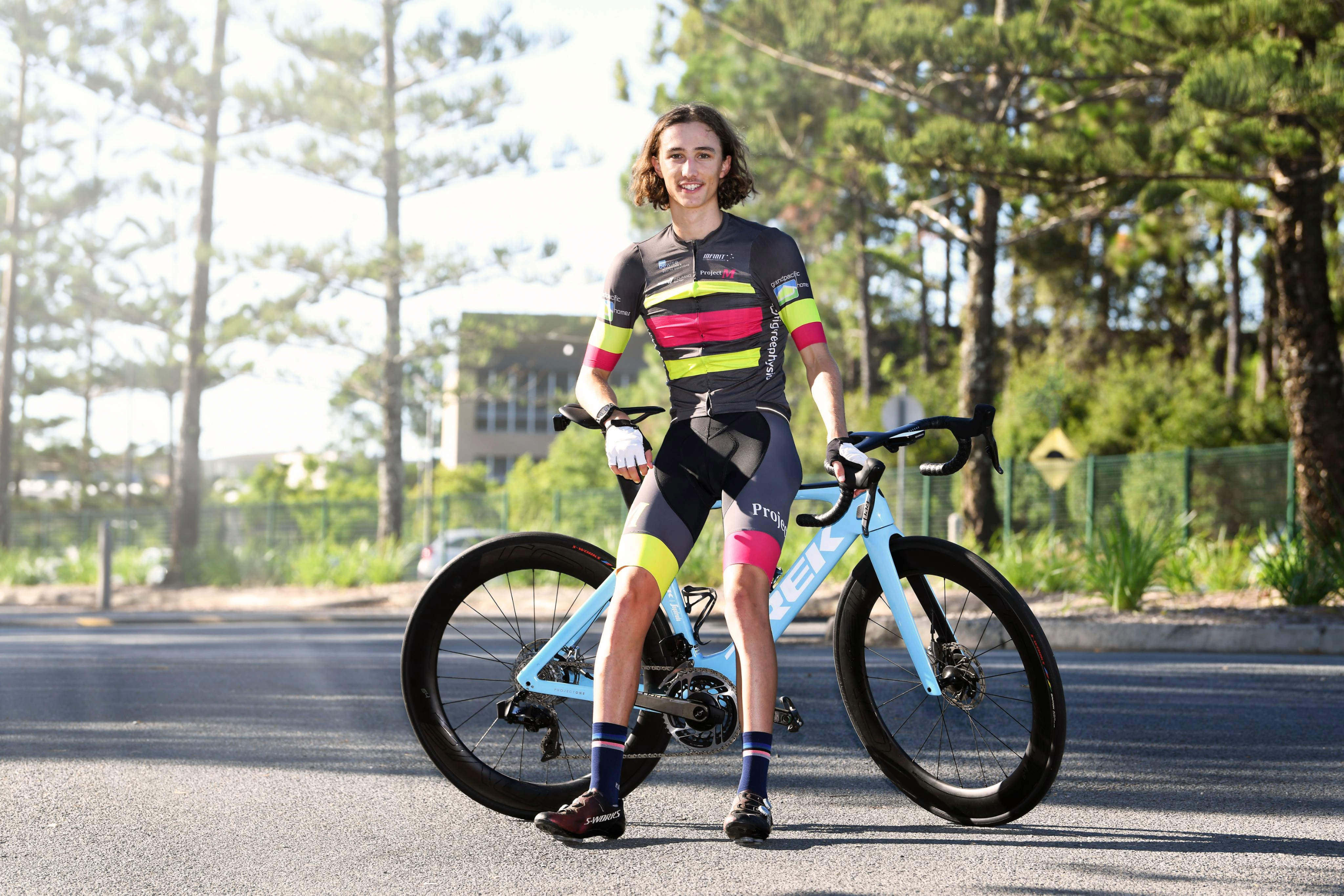
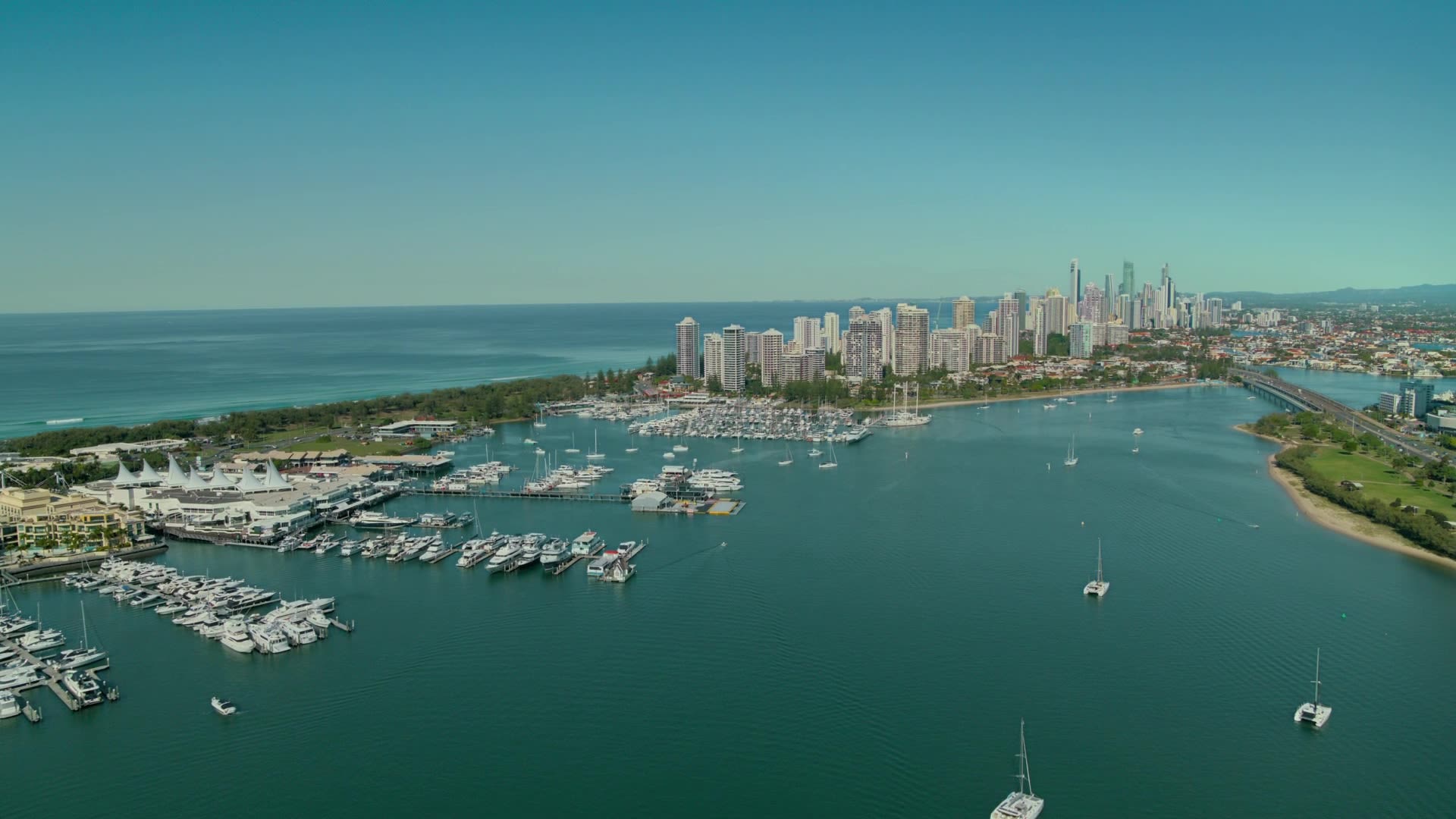
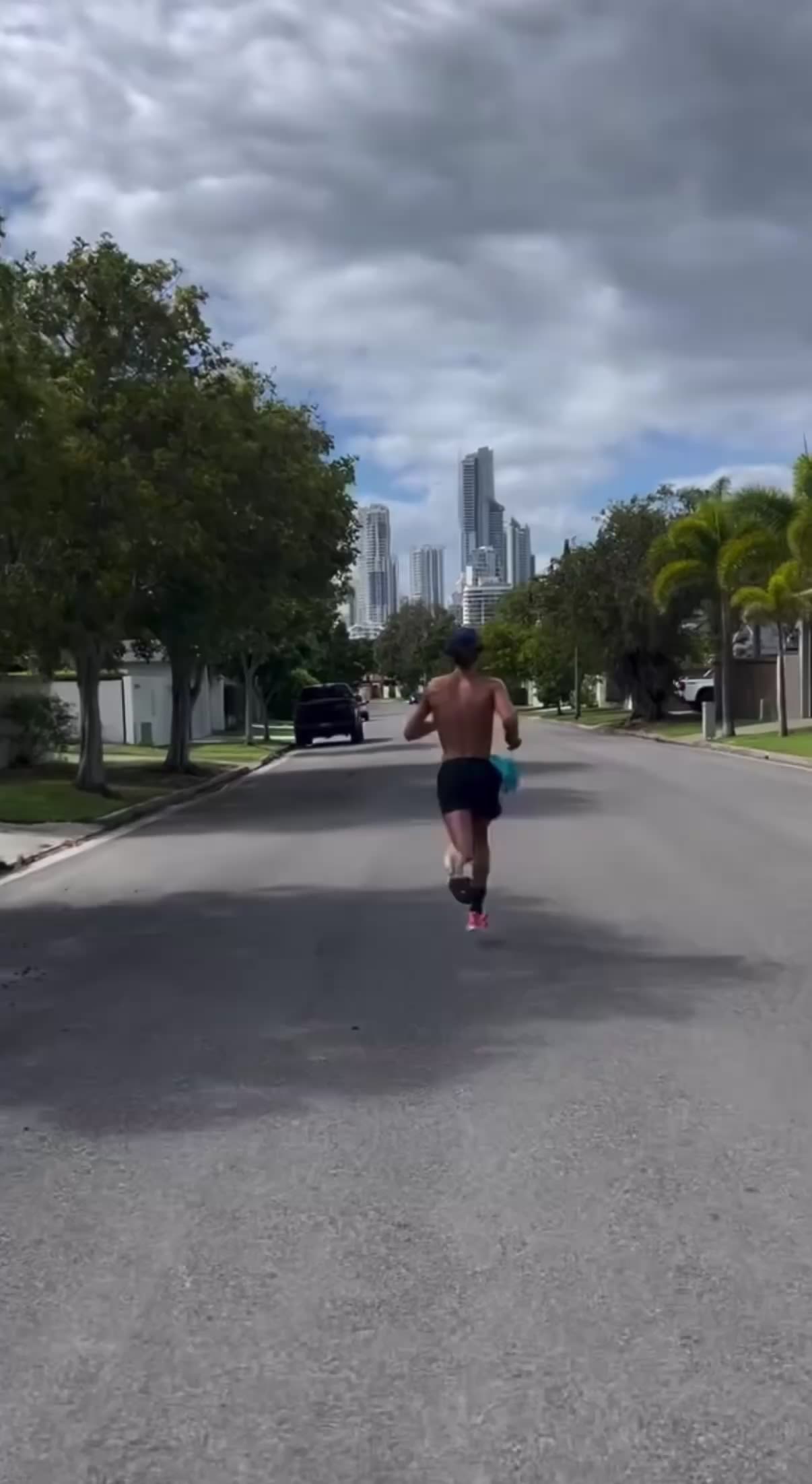
The Gold Coast is in full summer glow. Tourists pause to snap photos. Families drift across the water on paddleboards and lilos. Jet skis carve white trails through the bay. Kye Robinson barely notices. Sweat stings his eyes as he powers along the foreshore, passing the postcard landmarks that draw visitors from all over the world.
He hits the Sundale Bridge and rises out of the saddle, legs burning as he forces the pedals around again and again. Below him the Broadwater glistens in the afternoon sun.
The Gold Coast is in full summer glow. Tourists pause to snap photos. Families drift across the water on paddleboards and lilos. Jet skis carve white trails through the bay. Kye Robinson barely notices. Sweat stings his eyes as he powers along the foreshore, passing the postcard landmarks that draw visitors from all over the world.
He hits the Sundale Bridge and rises out of the saddle, legs burning as he forces the pedals around again and again. Below him the Broadwater glistens in the afternoon sun.
Out on the water, fishermen drop lines from tinnies rocking gently in the tide as boats drift lazily across the bay.
Out on the water, fishermen drop lines from tinnies rocking gently in the tide as boats drift lazily across the bay.
For most Gold Coasters, it’s an aquatic playground. For Robinson, it’s a battlefield where his aching body wages war against his mind for 100km.

For most Gold Coasters, it’s an aquatic playground.
For Robinson, it’s a battlefield where his aching body wages war against his mind for 100km.
On a brutal 35-degree Sunday in December 2025, the 21-year-old triathlete is alone on the road, chasing the pace that carried him to an Olympic Distance World Championship and trying to stretch it across twice the distance.
On a brutal 35-degree Sunday in December 2025, the 21-year-old triathlete is alone on the road, chasing the pace that carried him to an Olympic Distance World Championship and trying to stretch it across twice the distance.
The weekend warriors finished hours ago, rolling out before dawn to escape the worst of the heat when the sun reflects off the road and turns the air into a furnace.
Robinson chooses the heat and the route to mirror the conditions of his next challenge in Lusail, and because the same stretch of sunbaked road would become the course for the Gold Coast T100 he’d soon return to conquer.
In two weeks, he will board a plane for Qatar’s second-largest city, where futuristic stadiums and glass towers rise from the desert, built to withstand humidity, dust storms and relentless heat.
Robinson isn’t going there to admire the architecture.
He’s chasing a piece of history.
While most Australians were adding the finishing touches to Christmas decorations and racing through last-minute shopping lists, the Bond University Bachelor of Business alumnus was preparing for a different kind of deadline — honing his body and mind in pursuit of a second world title in two months.
The reigning Bond University Sports Star of the Year had already conquered the Olympic distance.
In October, Robinson stormed to victory in the World Triathlon Championship for the 20-24 age group, claiming the 51.5km title in front of family and childhood friends at his old stomping ground of Wollongong.
But as soon as he stepped off the podium, his focus shifted to another challenge, the inaugural T100 Age Group World Championships in Qatar.

The weekend warriors finished hours ago, rolling out before dawn to escape the worst of the heat when the sun reflects off the road and turns the air into a furnace.
Robinson chooses the heat and the route to mirror the conditions of his next challenge in Lusail, and because the same stretch of sunbaked road would become the course for the Gold Coast T100 he’d soon return to conquer.
In two weeks, he will board a plane for Qatar’s second-largest city, where futuristic stadiums and glass towers rise from the deser, built to withstand humidity, dust storms and relentless heat.
Robinson isn’t going there to admire the architecture.

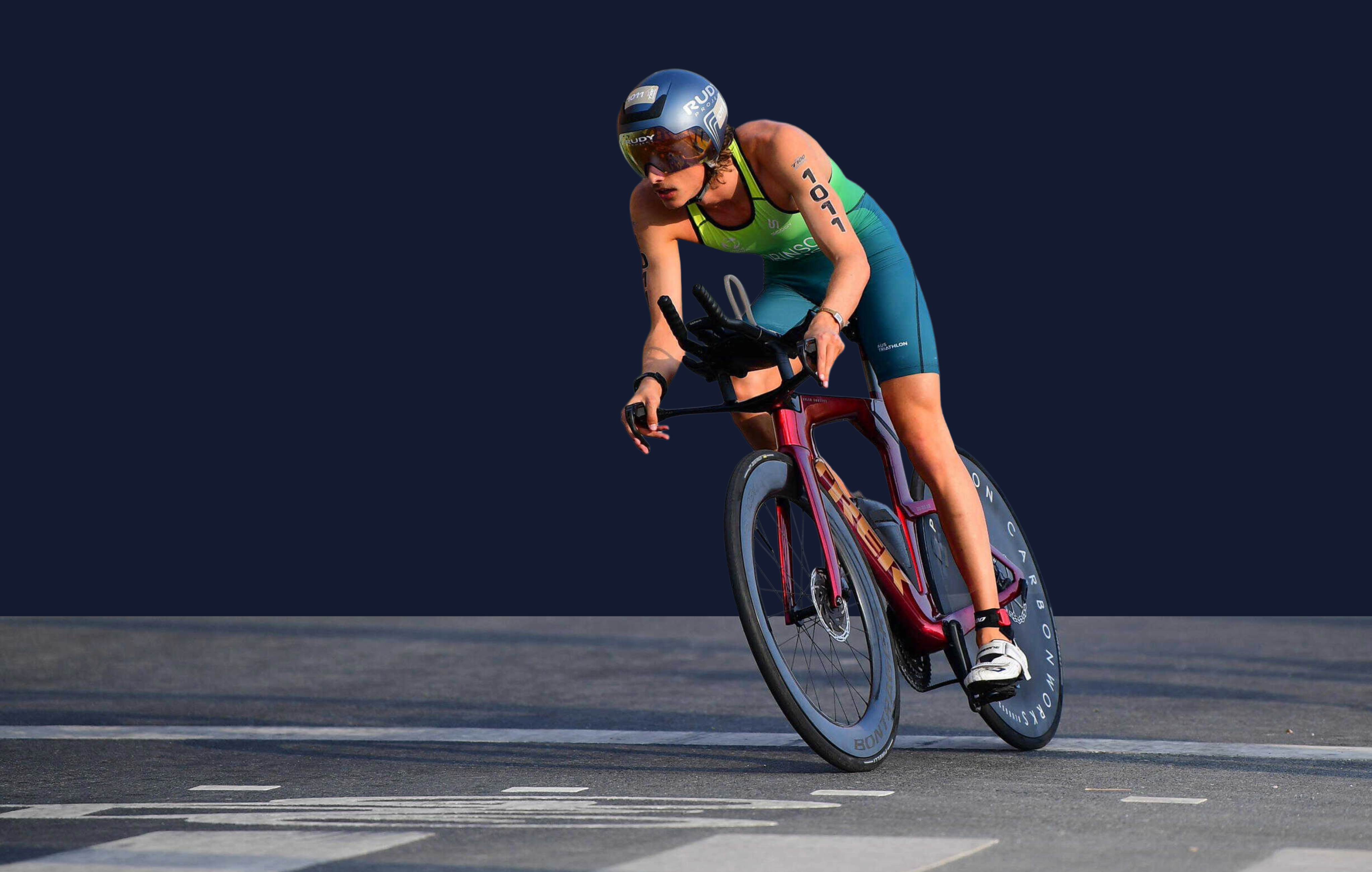
Photo courtesy of QATAR T100
He’s chasing a piece of history.
While most Australians were adding the finishing touches to Christmas decorations and racing through last-minute shopping lists, the Bond University Bachelor of Business alumnus was preparing for a different kind of deadline — honing his body and mind in pursuit of a second world title in two months.
The reigning Bond University Sports Star of the Year had already conquered the Olympic distance.
In October, Robinson stormed to victory in the World Triathlon Championship for the 20-24 age group, claiming the 51.5km title in front of family and childhood friends at his old stomping ground of Wollongong.
But as soon as he stepped off the podium, his focus shifted to another challenge, the inaugural T100 Age Group World Championships in Qatar.
At 100km, the race would present a whole new test.
Twice the distance on the bike. A longer run. And a brutal examination of pacing, the kind that rewards athletes brave enough to surge early and strong enough to somehow hang on.
Bond University researcher Glauber Scattolini Correa finds the sport of triathlon so fascinating, he made it the topic of his PhD titled 'Characterisations of highly trained junior triathletes and determination of predictors of Super Sprint Triathlon performance'. He says Robinson’s achievement in Wollongong alone marked him as an exceptional athlete.
“Becoming an age-group world champion is a huge achievement because you have so many athletes who train and behave like professionals,” Scattolini Correa says.
“To compete at that level and win one world championship requires a lot of life and training balance, but to think about doing it across two different distances, that’s massive.”
The preparation
After claiming victory in Wollongong, Robinson had just two months to prepare for his first 100-kilometre race and the opportunity to carve out a slice of history.
But far from a frantic last-minute build-up, his preparation was relatively measured, thanks to a gruelling winter training block that had already laid the foundation.
“I couldn’t really get a whole lot done in the two months leading into Qatar — it was really just maintenance because I didn’t want to get injured,” Robinson said.
“But I always have a base for longer stuff due to the huge winter training blocks I complete when I don’t have to worry about racing.”
“In winter I’ll build up to a six-hour ride and then run off the bike. It’s not really relevant to my short-course races where I’m riding two hours at most, but having that base means later in the year when I don’t have time to build it back up, it’s already there.”
Aware of the emotional demands of the sport, Robinson also made space to protect his mental health.
“I had a week off with friends a few weeks out from Qatar, which helped me absorb some of the harder training,” he said.
“That doesn’t happen very often, but I just thought, ‘I’ll make it work.’”
Triathlon, he admits, is a lonely sport.
“I wouldn’t say triathlon is good for social life, it’s very isolating,” he said.
“Other than that week off, I trained every single day and didn’t take breaks anywhere.”
Photo courtesy of QATAR T100
At 100km, the race would present a whole new test.
Twice the distance on the bike. A longer run. And a brutal examination of pacing, the kind that rewards athletes brave enough to surge early and strong enough to somehow hang on.
Bond University researcher Glauber Scattolini Correa finds the sport of triathlon so fascinating, he made it the topic of his PhD titled 'Characterisations of highly trained junior triathletes and determination of predictors of Super Sprint Triathlon performance'. He says Robinson’s achievement in Wollongong alone marked him as an exceptional athlete.
“Becoming an age-group world champion is a huge achievement because you have so many athletes who train and behave like professionals,” Scattolini Correa says.
“To compete at that level and win one world championship requires a lot of life and training balance, but to think about doing it across two different distances, that’s massive.”
The preparation
After claiming victory in Wollongong, Robinson had just two months to prepare for his first 100-kilometre race and the opportunity to carve out a slice of history.
But far from a frantic last-minute build-up, his preparation was relatively measured, thanks to a gruelling winter training block that had already laid the foundation.
“I couldn’t really get a whole lot done in the two months leading into Qatar — it was really just maintenance because I didn’t want to get injured,” Robinson said.
“But I always have a base for longer stuff due to the huge winter training blocks I complete when I don’t have to worry about racing.”
“In winter I’ll build up to a six-hour ride and then run off the bike. It’s not really relevant to my short-course races where I’m riding two hours at most, but having that base means later in the year when I don’t have time to build it back up, it’s already there.”
Aware of the emotional demands of the sport, Robinson also made space to protect his mental health.
“I had a week off with friends a few weeks out from Qatar, which helped me absorb some of the harder training,” he said.
“That doesn’t happen very often, but I just thought, ‘I’ll make it work.’”
Triathlon, he admits, is a lonely sport.
“I wouldn’t say triathlon is good for social life, it’s very isolating,” he said.
“Other than that week off, I trained every single day and didn’t take breaks anywhere.”
The gift
A key factor in Robinson staying injury-free has been reducing the load on his legs.
Despite racing at a breakneck pace, the former New South Wales cross-country representative actually runs less than many recreational runners.
“Running is really the discipline that I work on the least,” he said. “I’ll run three, maybe four times a week and that’s it.
“Not so long ago I moved to 50-kilometre weeks, which is still super low. Even casual runners will be doing 60- or 70-kilometre weeks, but for me to do 50k I felt like I was on the edge of injury, so I backed it off.”
The approach works because running has always come naturally.
“I ran from when I was about five and when I got old enough, I would go for runs by myself before school just because I enjoyed it,” he said.
“The run is what made triathlon so attractive.”
Scattolini Correa says there are several factors that determine whether someone becomes a naturally efficient runner.
“Movement efficiency is a network of elements working together, there’s no single thing that determines how efficient your running is,” he said.
“It’s about not only your body proportions but how you use those proportions. There’s a training effect, but genetics also play a role.”
“Even as a coach, the goal is to help an athlete develop their best biomechanical approach to movement. But some people simply have it naturally.”
He describes Robinson’s ability as something more than a gift.
“Kye has a very good running economy, so running feels a little effortless,” he said.
“That makes his life much easier because of the injury prevention. The most important thing is being healthy enough to train.
“Running is the discipline that hurts the most for triathletes, so if he can reduce his training load without losing performance, that’s one of his superpowers.”

The race
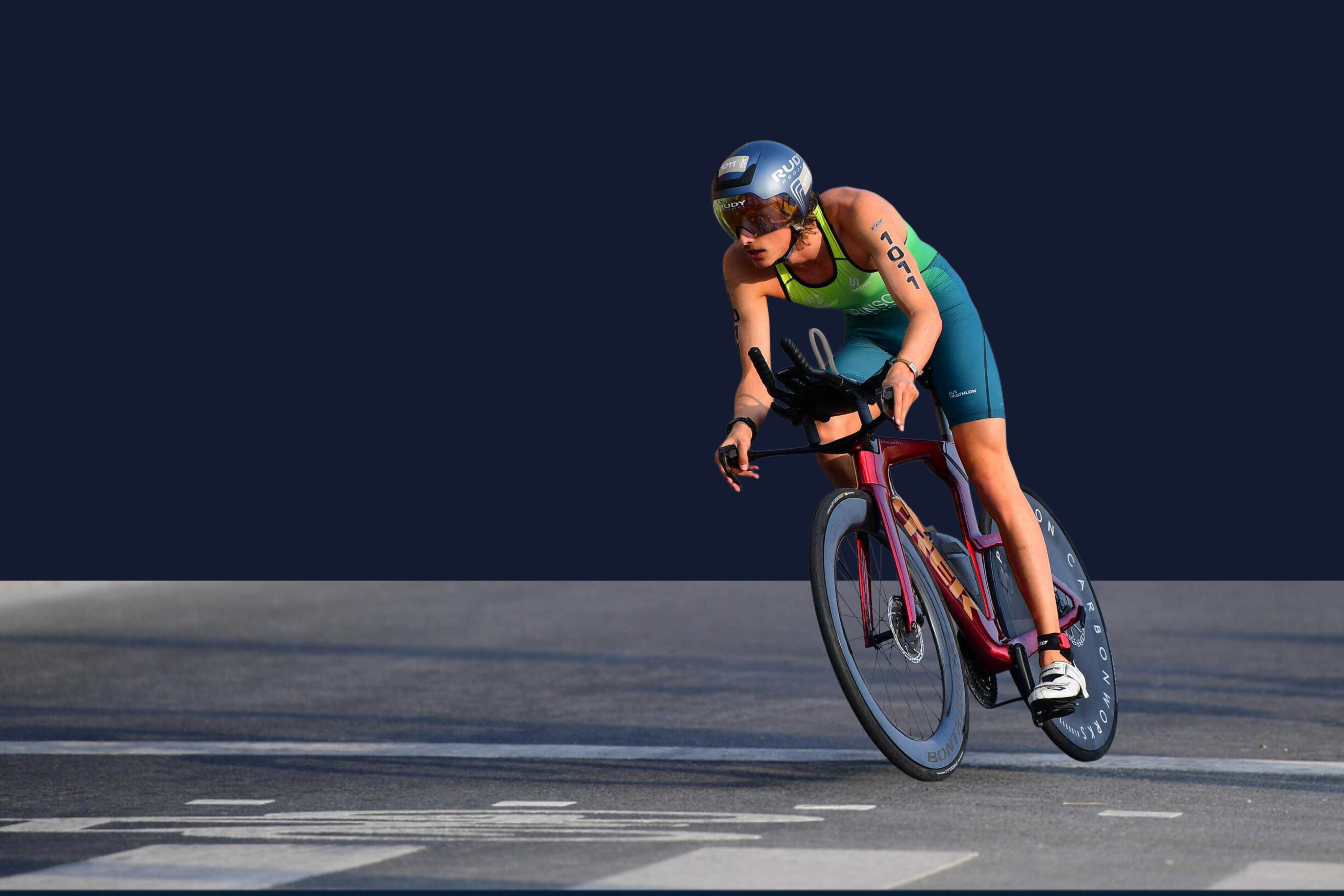
The lonely training rides would pay off. Robinson didn’t just win in Qatar - he dominated.
Emerging from the water in third, he launched into a blistering bike leg, recording faster kilometre splits than he had managed in Wollongong - despite racing twice the distance.
Then came the run.
To describe Robinson as a natural runner is almost an understatement. He doesn’t so much run as glide across the ground, the kind of effortless movement seen only in the most biomechanically gifted athletes.
Even walking looks like an act of restraint, as though every stride requires an effort to hold back the muscle memory that wants to launch him into a run.
Over 18km, he pulled further and further away from the field, running three and a half minutes, which equates to about a kilometre faster than his nearest competitor.
Crossing the finish line, Robinson was characteristically understated. There was no dramatic celebration or victory salute, just a quiet smile to the cheering crowd.
At the time, Robinson wasn’t fully aware of the magnitude of his achievement. Which perhaps says more about him than any statistic ever could. Never one to look too far ahead, he prefers to stay focused on the task immediately in front of him.
That foundation paid off again months later when he returned to his training route and stormed to victory in the Gold Coast T100 – winning in a faster time than he produced in Lusail and finishing an astonishing fourth overall, a result that hinted at just how far his ceiling might stretch.
Original thinking direct to your inbox

Stories from Bond