
Beyond
big tech
Alumnus and ex-Google executive on the AI revolution, and his path into tech

Beyond
Big Tech
Alumnus and ex-Google executive on the AI revolution, and his path into tech

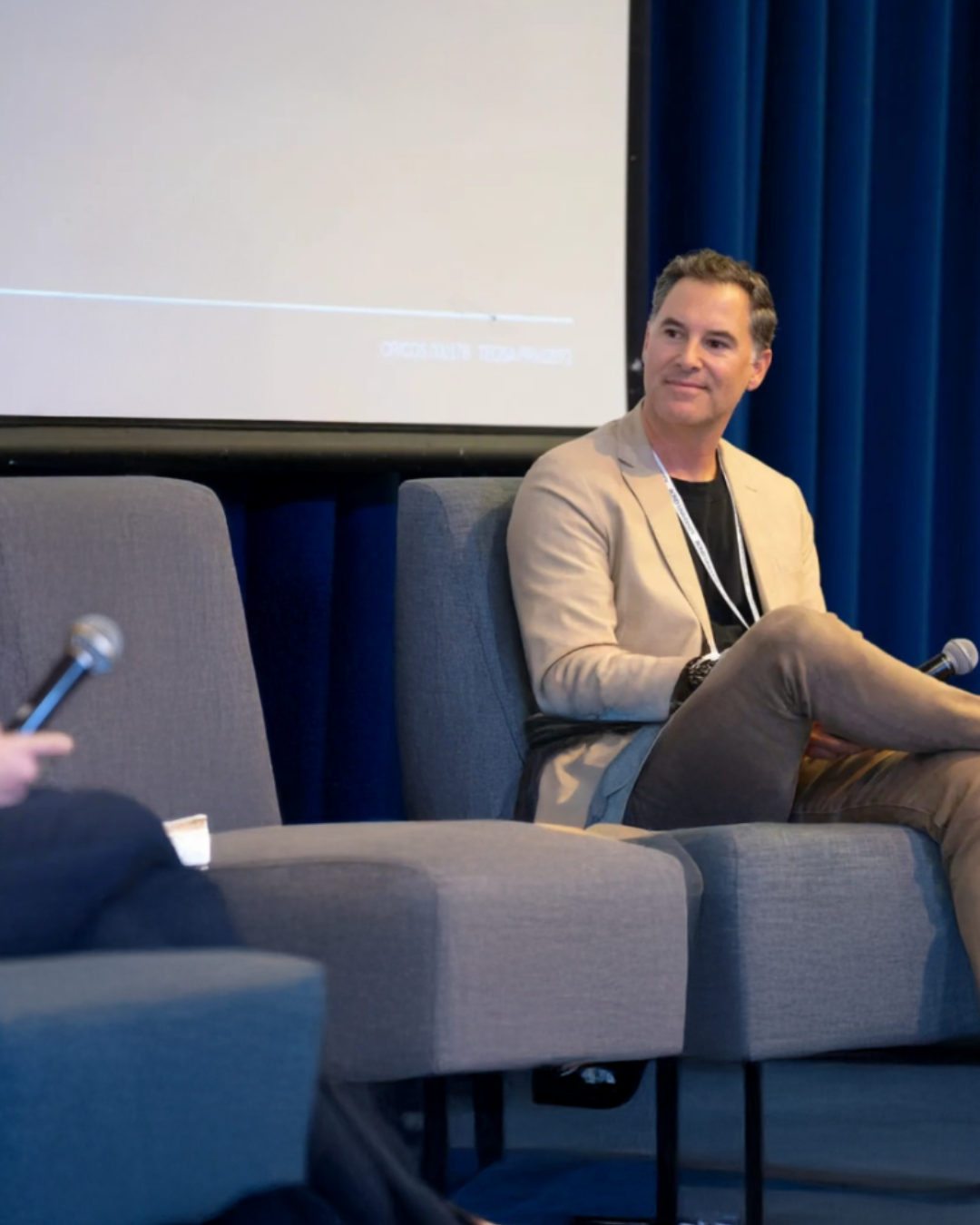
Growing up in a small town in New South Wales Southern Highlands, landing a role with one of the largest companies on the planet — in what is undoubtedly its coolest office — seemed, quite literally, a world away. But a natural curiosity, desire to experiment and thirst for knowledge, hurtled Tristan Cameron on a career trajectory that has seen him rise the ranks of the global big tech industry.
He shares his journey from Bowral (population 7,000) to Google (global workforce 180,000), his latest projects, and the skills he believes are critical for our next generation to keep pace in a rapidly transforming workplace.
Tristan’s journey into tech could be described as non-traditional. Attending boarding school in Brisbane, he studied a Bachelor of Business and Exercise Science, before spreading his wings in Paris with the prestigious Jones Day law firm, London’s public service and the Queensland Government in Brisbane.
His pivotal moment came next, opening the door to global opportunities. “I was at a crossroads in my career, having done the same work for eight years,” Tristan says.
“I lived across the street from Bond and drove past every morning on my way to catch the train to Brisbane. It got to me and I thought ‘I want to go back. I want to learn’.”
Within three weeks of attending an information session, he began a Master of Business Administration (MBA) at Bond. It led to study abroad at the Rensselaer Polytechnic Institute (RPI) in New York, considered one of America’s top tier engineering and computer science universities, and the turning point in his career.
Through a 2012 alumni event in New York, he landed a sales engineer role for a tech startup in San Francisco. In 2014, he moved to Google — the beginning of an 11-year stint with the international powerhouse, where he rose to Global Head of Sales GTM (Go-to-Market).

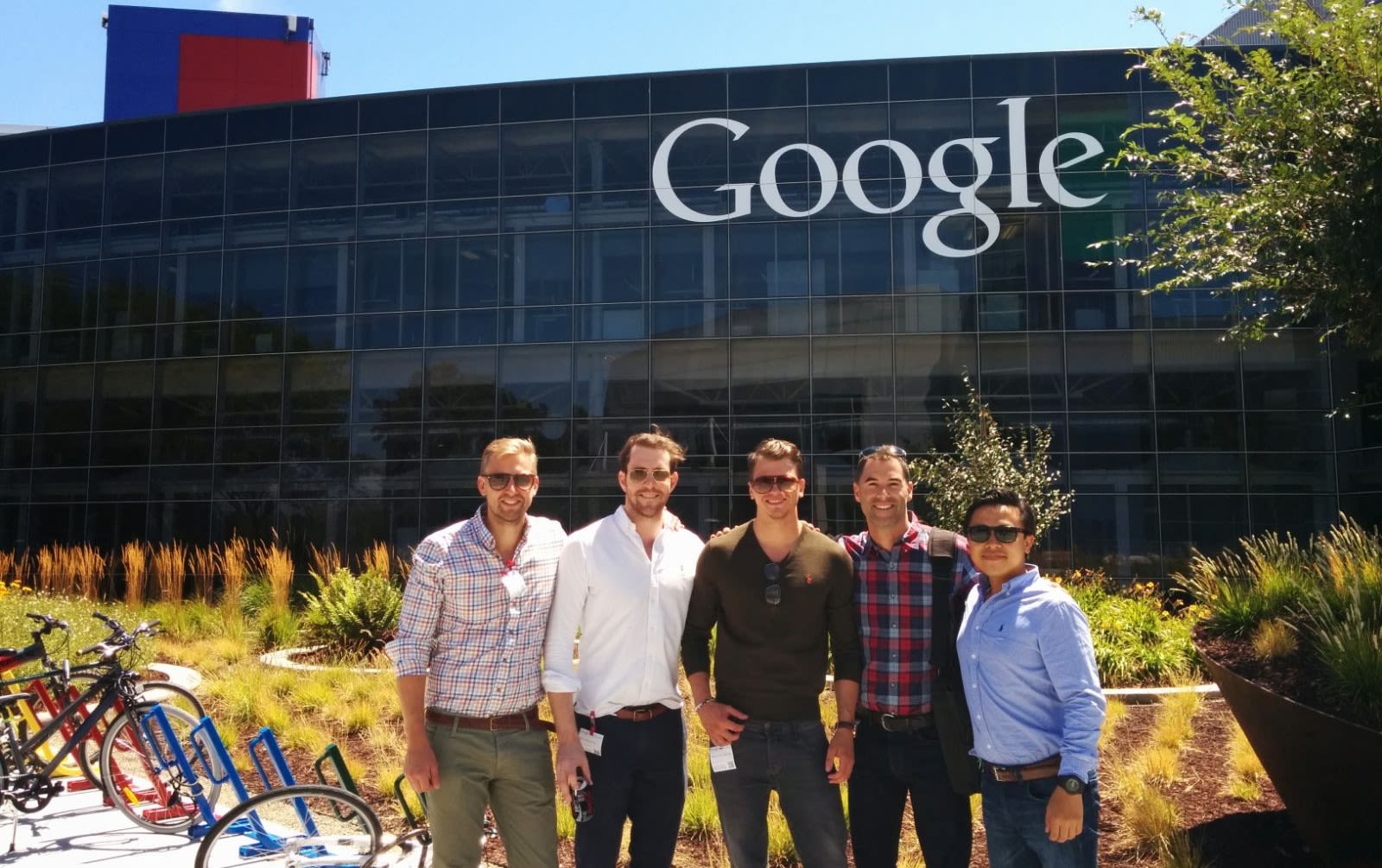
Tristan visiting Google in California with his MBA cohort in 2012.
Tristan visiting Google in California with his MBA cohort in 2012.
Life at Googleplex
Prior to the COVID-19 pandemic, Tristan spent half his time on the road, and partnering with international colleagues in Europe, Americas, India, South East Asia and “you name it”.
“I was drinking from the fire hose and very quickly operating in a truly global setting. All my roles at Google were centrally based in the Bay Area, but I was literally everywhere,” Tristan says.
“The level of autonomy is scary thinking back. The decisions you are making are impacting hundreds of millions, if not billions, of dollars of revenue and being made on the fly very quickly.
“There was zero bureaucracy. That changed as the company expanded, but early on when I joined there was about 45,000 staff and very little bureaucracy.
“It was beg for forgiveness, not ask for permission, and that was very different from the world I had worked in public service, where there were layers of bureaucracy and months of decision making.
“Google created an environment for innovation, piloting, testing and experimenting. They did a phenomenal job with the level of autonomy and decision making afforded.”
Among his proudest achievements at Google is helping Bondies get a foot in the door and hosting Silicon Valley Study tours. Providing carte blanche access to the famed cafeterias, swimming pools, gyms, labs and iconic replica Tyrannosaurus rex, which stands as a reminder to ‘not become a dinosaur’, was something he loved to do.
Finding the breadcrumbs
The decision to leave was not easy, but after 14 years in America — which Tristan says is “13 longer than he previously imagined” — he moved back to Australia in 2025, setting up in Sydney. Having met his wife, an American real estate attorney, and had a son, now six, it was time to share his favourite parts of growing up Down Under.
“I wanted my son to see cricket and do Nippers, all the Aussie ways of life,” he says.
Along with advisory work and angel investing in tech start-ups, he is working on his own venture — a business-to-consumer (B2C) app called breadcrumX that is prototype ready and due for general release soon.
The digital asset management tool identifies and sources life’s operational data, and tracks expiry dates for everything from passports to insurance policies. Unlike existing methods of data keeping, it is AI powered so information is up-to-date and shareable.
“It is a tool that is not only useful for busy professionals and families. The idea came from a lived experience after a family member passed away and we were trying to pick up the pieces, or breadcrumbs; so, it is also for estate planners, loved ones and executors of wills,” Tristan says.

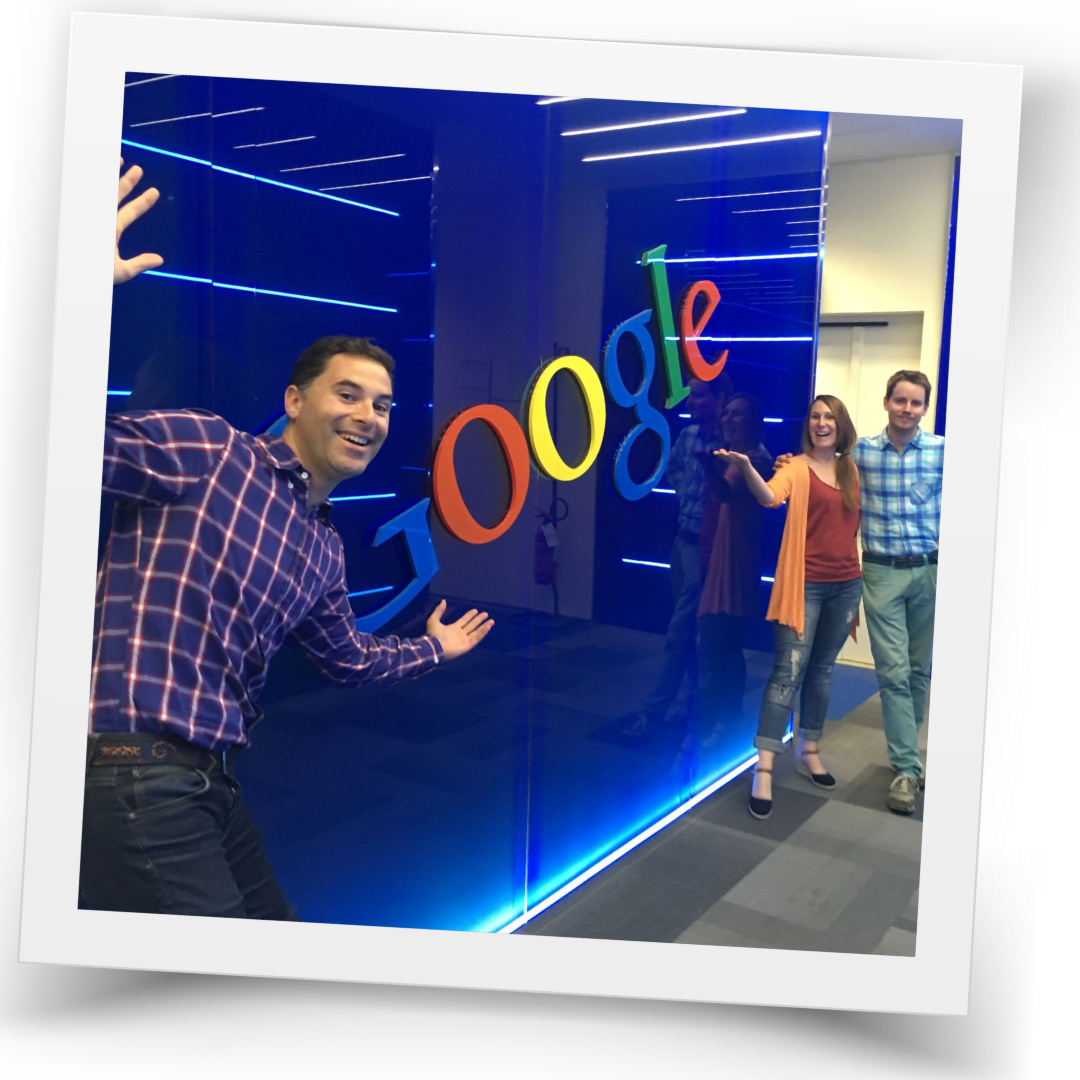
Tristan at Google in Milan, Italy.
Tristan at Google in Milan, Italy.
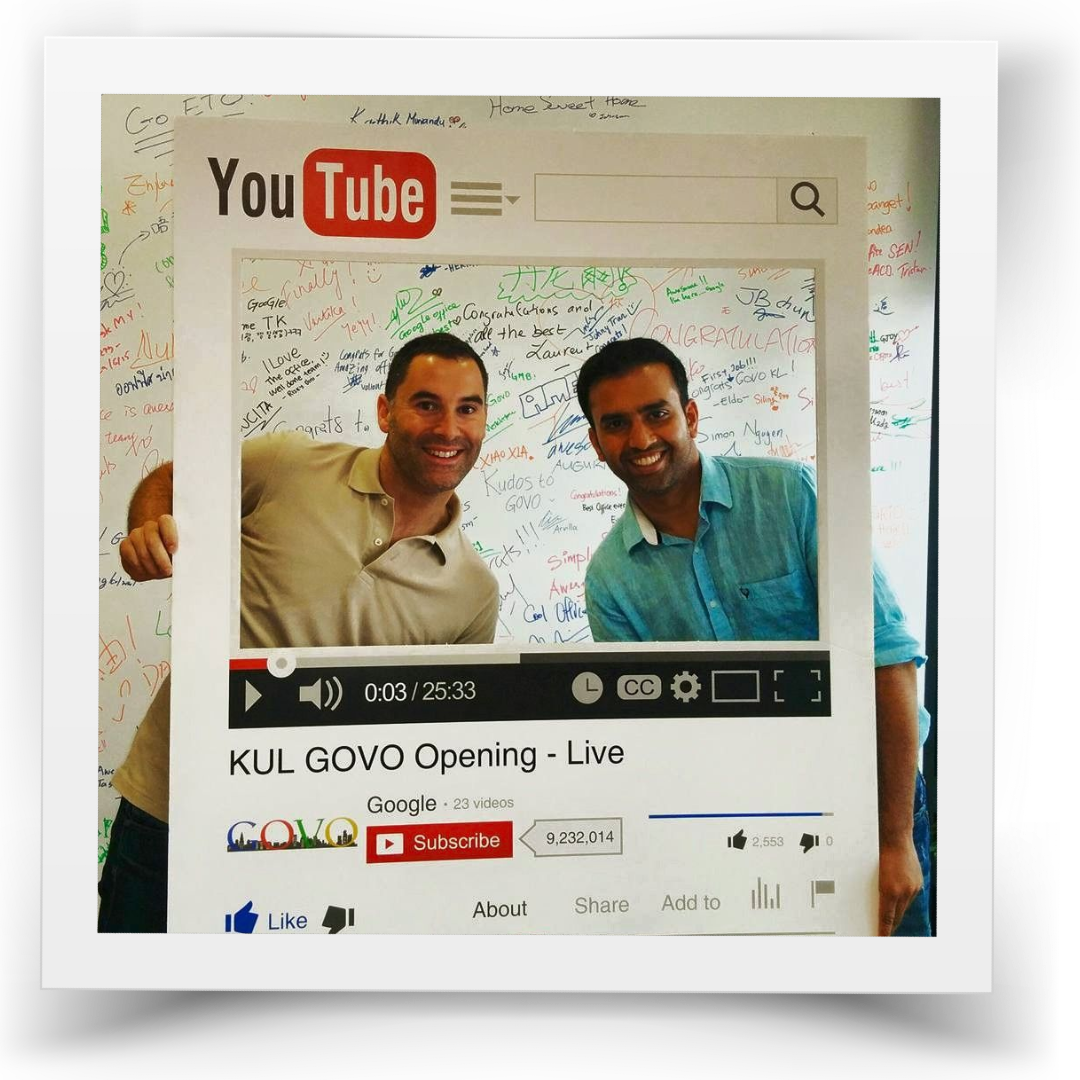
Tristan in Kuala Lumpur, Malaysia.
Tristan in Kuala Lumpur, Malaysia.
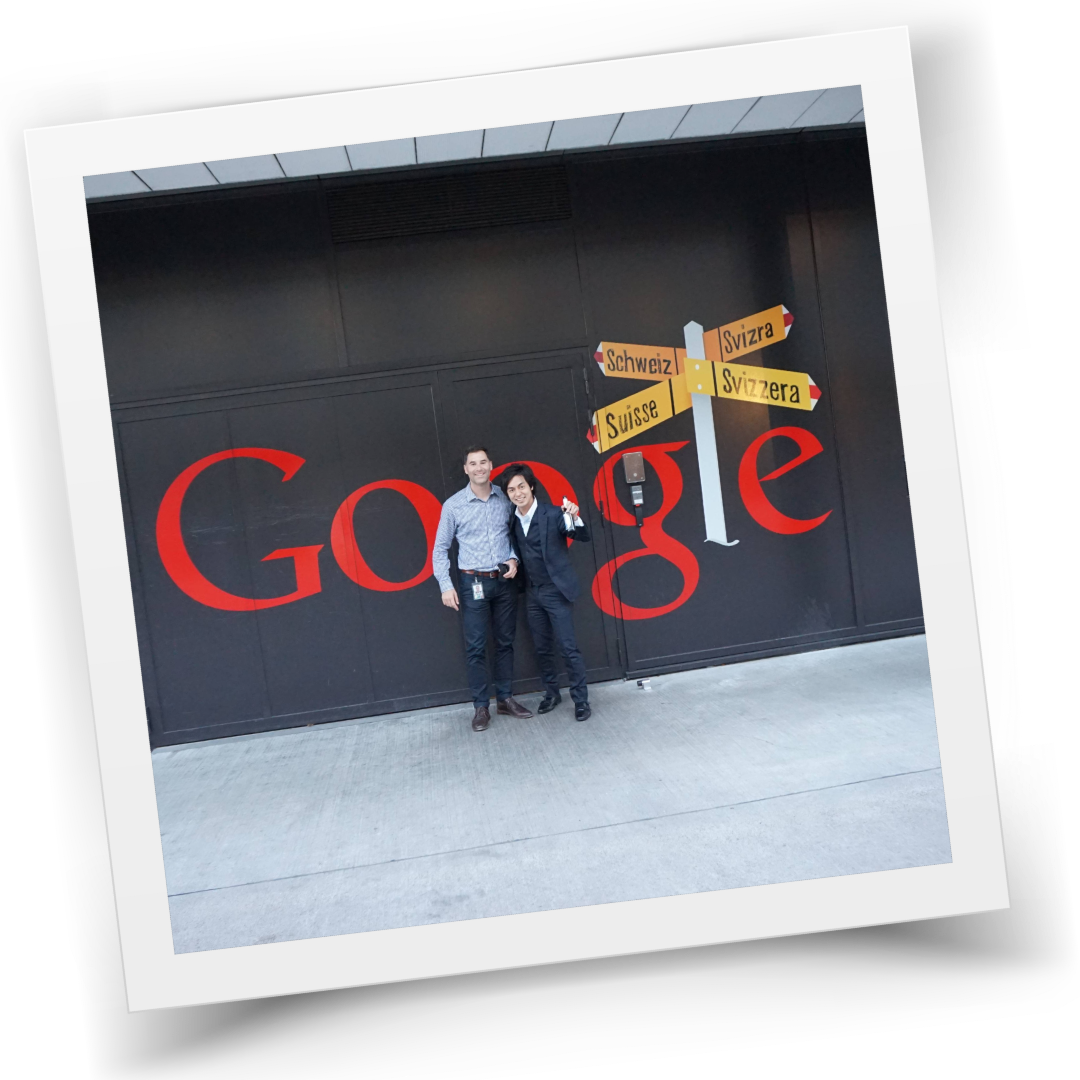
Tristan with Masayuki Nago in Zurich, Switzerland.
Tristan with Masayuki Nago in Zurich, Switzerland.
Life at Googleplex
Prior to the COVID-19 pandemic, Tristan spent half his time on the road, and partnering with international colleagues in Europe, Americas, India, South East Asia and “you name it”.

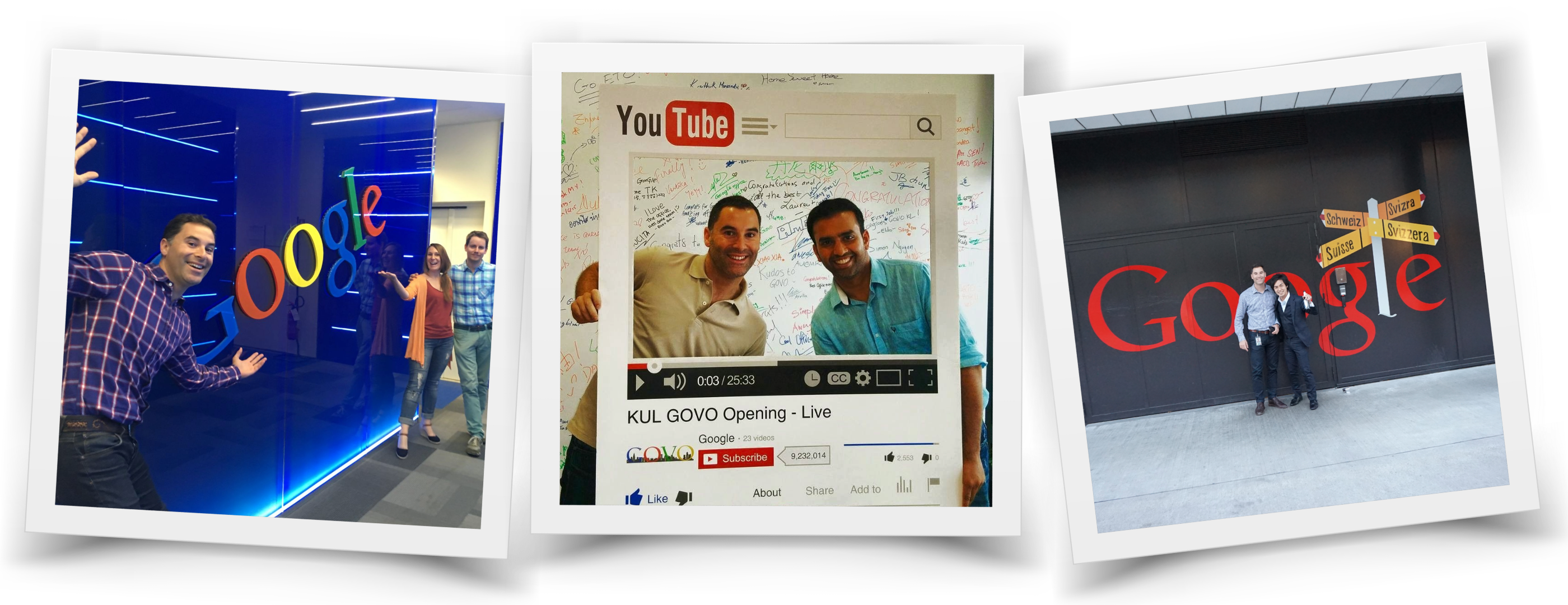
Tristan in Italy, Malaysia and Switzerland.
Tristan in Italy, Malaysia and Switzerland.
“I was drinking from the fire hose and very quickly operating in a truly global setting. All my roles at Google were centrally based in the Bay Area, but I was literally everywhere,” Tristan says.
“The level of autonomy is scary thinking back. The decisions you are making are impacting hundreds of millions, if not billions, of dollars of revenue and being made on the fly very quickly.
“There was zero bureaucracy. That changed as the company expanded, but early on when I joined there was about 45,000 staff and very little bureaucracy.
“It was beg for forgiveness, not ask for permission, and that was very different from the world I had worked in public service, where there were layers of bureaucracy and months of decision making.
“Google created an environment for innovation, piloting, testing and experimenting. They did a phenomenal job with the level of autonomy and decision making afforded.”
Among his proudest achievements at Google is helping Bondies get a foot in the door and hosting Silicon Valley Study tours. Providing carte blanche access to the famed cafeterias, swimming pools, gyms, labs and iconic replica Tyrannosaurus rex, which stands as a reminder to ‘not become a dinosaur’, was something he loved to do.
Finding the breadcrumbs
The decision to leave was not easy, but after 14 years in America — which Tristan says is “13 longer than he previously imagined” — he moved back to Australia in 2025, setting up in Sydney. Having met his wife, an American real estate attorney, and had a son, now six, it was time to share his favourite parts of growing up Down Under.
“I wanted my son to see cricket and do Nippers, all the Aussie ways of life,” he says.
Along with advisory work and angel investing in tech start-ups, he is working on his own venture — a business-to-consumer (B2C) app called breadcrumX that is prototype ready and due for general release soon.
The digital asset management tool identifies and sources life’s operational data, and tracks expiry dates for everything from passports to insurance policies. Unlike existing methods of data keeping, it is AI powered so information is up-to-date and shareable.
“It is a tool that is not only useful for busy professionals and families. The idea came from a lived experience after a family member passed away and we were trying to pick up the pieces, or breadcrumbs; so, it is also for estate planners, loved ones and executors of wills,” Tristan says.
An AI native workforce — and how Australia needs to adapt
With artificial intelligence (AI) here to stay and getting faster and more intelligent at a rapid pace — a fact Tristan describes as both exciting and frightening — Australian workers, schools and universities need to adapt quickly.
Tristan says we must bridge our AI education deficit to prevent a severe skills gap, which could lock our nation out of the global digital economy and erode productivity. Just 37 per cent of Australian organisations believe they have the talent to execute their AI strategies.
“Thankfully, Australian high schools are expected to follow a national framework for AI and most schools are integrating these tools into the curriculum to help students build essential digital skills,” he says.
“I hope Australia does not fall off the bandwagon. We have a huge opportunity to build practical AI pathways for students to master those skills, not through theory but practice, experimentation and ambition.”
He says soft skills will be essential — team management, relationship building and negotiation — with universities a primary engine for critical thinking in an era of automated information.

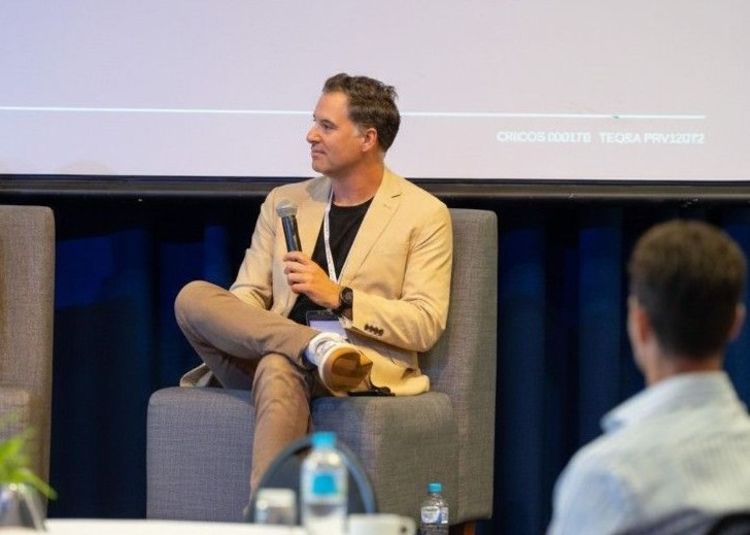
“Curiosity is critical because it is a changing landscape and what hiring managers are looking for now versus a couple of years ago is day and night. Submitting a resume will soon be a thing of the past, replaced by practical skills like building apps or automated workflows using AI to demonstrate high agency and aptitude,” Tristan says.
“Employers are looking for AI natives, and the undergrads of today are really well placed. If they are experimenting during their studies, they will be well ahead of people who have been in the workplace 10 or 20 years, doing the same thing they have always done.
“Experimentation and being curious are more important than ever before.”
Published on Wednesday, 21 January, 2026.
Original thinking direct to your inbox

Stories from Bond