
Shark shake-up
Dr Daryl McPhee explains why there
has been a cluster of shark bites in
Queensland and New South Wales


Shark
shake-up
Dr Daryl McPhee explains
why there has been a
cluster of shark bites

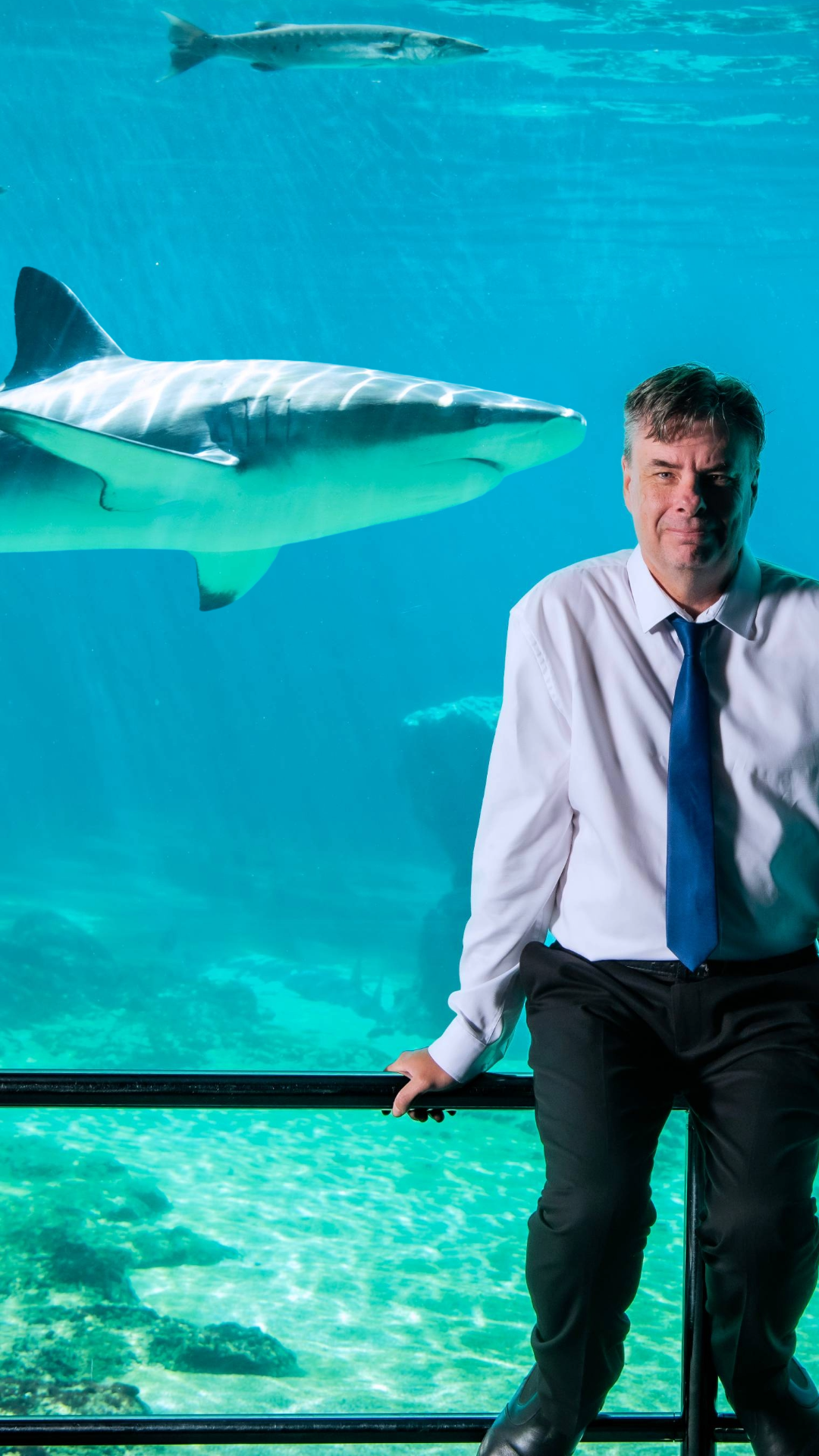
A cluster of shark bites makes headlines for one simple reason: it frightens people. When incidents occur close together, the perception quickly shifts from “rare” to “something is going wrong”. I understand that reaction. For many Australians, particularly on the Gold Coast, the beach is not a luxury but part of daily life. When that sense of safety is shaken, anxiety follows. But fear is a poor substitute for understanding.
What we are seeing in New South Wales is not a mystery, nor is it evidence that our beaches are suddenly unsafe. These incidents align with a well-understood set of environmental conditions that occur periodically and predictably.


January and February are peak months for bull shark activity, particularly around Sydney, but they are also active inshore on the Gold Coast at that time, including in our canals. It’s a time when warm water brings food closer to shore, and wet season rainfall flushes baitfish from rivers and creeks into coastal areas. As a result, the water becomes murky. Bull sharks are exceptionally well adapted to hunt in exactly those conditions.
The summer months are also the breeding season for bull sharks and the females come inshore and into rivers and canals to release their pups. With these coinciding factors, short-term risk increases. That does not mean the ocean has changed; it means we need to adjust our behaviour.
On the Gold Coast, the overall risk of shark bite remains statistically very low. You are far more likely to be injured driving to the beach than swimming at it.
In terms of patients presenting with surfing-related injuries research at the Gold Coast Hospital between 2008 and 2018, only four out of 2680 injuries were from shark bites. But “low risk” does not mean “no risk”, and clusters of incidents remind us that the ocean is a dynamic environment, not a swimming pool.
The most important takeaway from recent events is not about sharks, but about preparedness.
The reason a seriously injured swimmer in NSW has a fighting chance of survival is because trained surf lifesavers were on site, equipped with trauma kits and tourniquets, and able to respond immediately.
This is why swimming at patrolled beaches is not a slogan but a proven safety measure. When people avoid crowds and swim outside patrol zones, they also remove themselves from that safety net.
There are other evidence-based steps the public can take to reduce risk further. Avoid swimming in murky or flood-affected water, particularly after heavy rain. Avoid dawn and dusk, when light levels are low. Do not swim alone. If you surf regularly, consider personal electronic shark deterrents that have been independently tested and shown to reduce the likelihood of a bite, though nothing reduces risk to zero.


What about shark nets, drumlines and other lethal control measures?
These debates are often framed as black-and-white, but the reality is more complex.
In the long term, Australia will need to transition away from lethal methods toward non-lethal approaches including drones, detection technologies and education.
That transition must be evidence-based and supported by the community. Reacting emotionally to short-term spikes will not get us there faster.
Importantly, events in New South Wales do not automatically translate to elevated risk on the Gold Coast.
Our conditions, species, water temperature, rainfall and prey distribution all add up to a very different risk profile here.
Shark bites are not contagious, and they are not spreading north or south like a weather system.
Australia has one of the best coastal safety systems in the world.
Our surf lifesavers, lifeguards and emergency responders are highly trained and increasingly well equipped.
The ocean will always carry risk. The goal is not to eliminate it, which is impossible, but to manage it intelligently.
Sharks are not invading our beaches. They are doing what they have always done, responding to environmental cues.
What about shark nets, drumlines and other lethal control measures?
These debates are often framed as black-and-white, but the reality is more complex.
In the long term, Australia will need to transition away from lethal methods toward non-lethal approaches including drones, detection technologies and education.
That transition must be evidence-based and supported by the community. Reacting emotionally to short-term spikes will not get us there faster.
Importantly, events in New South Wales do not automatically translate to elevated risk on the Gold Coast.
Our conditions, species, water temperature, rainfall and prey distribution all add up to a very different risk profile here.
Shark bites are not contagious, and they are not spreading north or south like a weather system.
Australia has one of the best coastal safety systems in the world.
Our surf lifesavers, lifeguards and emergency responders are highly trained and increasingly well equipped.
The ocean will always carry risk. The goal is not to eliminate it, which is impossible, but to manage it intelligently.
Sharks are not invading our beaches. They are doing what they have always done, responding to environmental cues.




If we respond with knowledge rather than panic, we can continue to enjoy the water safely.

If we respond with knowledge rather than panic, we can continue to enjoy the water safely.
This article was first published in print and online by News Corp.

Original thinking direct to your inbox

Stories from Bond