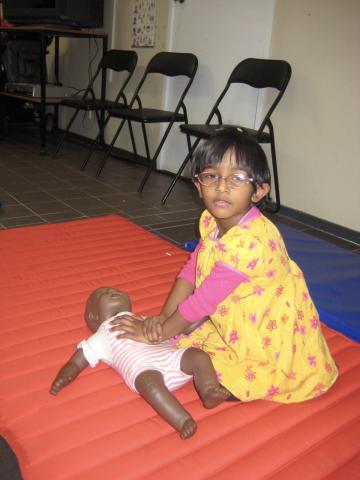
While most toddlers were learning their ABCs, Nethaki Rupasinghe was learning CPR.
A family photo shows her at two years of age practising chest compressions on an infant dummy, imitating her mother’s work as a CPR and first aid trainer.
Years later, that early exposure has led her to a troubling discovery: across Asia, women who suffer cardiac arrest are far less likely than men to receive CPR from bystanders.
As part of her Master of Healthcare Innovations at Bond University, Ms Rupasinghe reviewed studies from nine Asian countries and found a consistent pattern.
In public spaces in South Korea, women received CPR only 12.7 percent of the time, compared with 14.9 percent for men. In Japan, public defibrillators were applied to women just 2.1 percent of the time, compared with 6.3 percent for men.
Across all nine countries, women were consistently disadvantaged in lifesaving interventions.
Ms Rupasinghe’s review identified several reasons for the disparity.
Cultural norms around modesty, fears of legal repercussions, and entrenched gender stereotypes all discourage bystanders from helping women in emergencies.
Training programs also play a role, with CPR courses almost always using male mannequins, leaving responders uncertain about how to act when the victim is female.
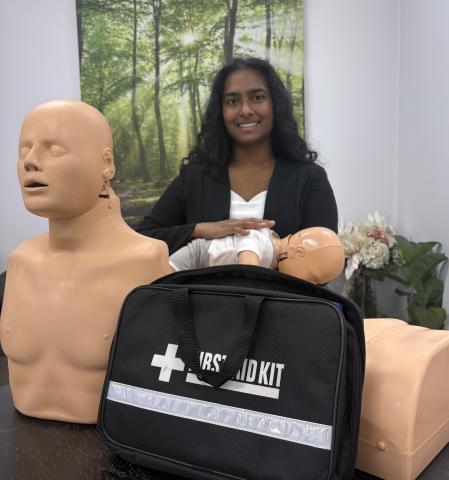
“This project started very personally,” Ms Rupasinghe said.
“My mum works in CPR and first aid training, so I grew up around training rooms, manikins, and certifications.
“As I got older and started studying biomedical science and health innovation, I began to notice little discrepancies that I’d never questioned before, like the fact that CPR training almost always uses male dummies. That made me curious.”
The research is the first scoping review in Asia to examine sex disparities in bystander CPR.
It also offers practical solutions: inclusive training with female manikins, culturally tailored public health campaigns and clearer legal protections to encourage intervention.
Ms Rupasinghe who also holds a Bachelor of Biomedical Science from Bond University, graduated with her Master of Healthcare Innovations in February 2026.