Key points
- Unused urban land such as rooftops and vacant lots can supply cities with locally-grown produce.
- Vertical farms like the Gold Coast's Stacked Farm already operate at scale.
- UK, European, and US small-grower support schemes exist but Australia has a policy gap.
- Benefits include reduced food miles, fresher produce and insulation from supply-chain shocks.
By Professor Marcus Randall
Urban dwellers have always looked outward to feed themselves, to the farms and paddocks beyond the city limits.
But walk through any Australian city and you’ll find that the land to feed its inhabitants has been there all along, hiding in plain sight on rooftops, in vacant lots and in the unused corridors between suburbs.
With global oil shocks causing diesel and fertiliser shortages, it’s time to start uncovering these hidden gems inside our urban footprint.
But to make it work, there will need to be some changes.
The Gold Coast's untapped opportunity
Governments at every level need to make growing fruit and vegetables locally more attractive and financially viable. That means real tax incentives, it means zoning changes, and it means councils rethinking what they do with the spare land sitting right under their noses.
Take the Gold Coast. It’s a slightly unusual city that’s stretched out along the coast, with multiple small CBD-type areas and a lot of land and space in between. That’s not a weakness, it’s an opportunity.
Space use is something we do pretty badly right now, but that could change if councils considered leasing, at low cost, their available land to smaller-scale market gardeners.

With the right incentives, the city could easily become self-sufficient for fruit and vegetables, but only with a change in ideas about urban planning and the way councils think.
Housing is eating our food land
The pressure on urban fringe land is real and growing. A 2020 research paper from the National University of Singapore found that housing growth corridors would consume around half of the 2025 hectares of land under vegetable production in the Sydney area.
Housing Australia’s growing population is, of course, a planning priority, and that makes identifying suitable alternatives for food production not just useful, but vital.
From backyards to burger chains
Unused rooftop space is one answer already being demonstrated through projects like Melbourne Skyfarm, which runs masterclasses and tours to show what’s possible in urban areas.
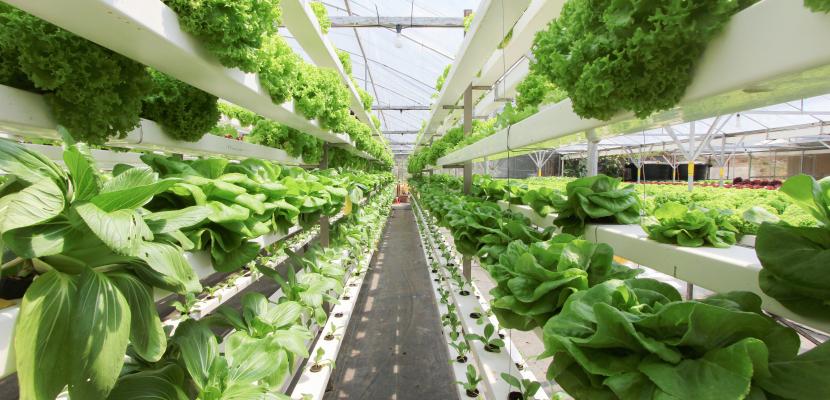
Vertical farming, with its much smaller footprint, is also growing in popularity. The Gold Coast’s own Stacked Farm is one of the most successful examples. Now operating on a commercial scale with clients including the Grill’d burger chain, another established farm in Melbourne and plans to expand into the US, it started life as a backyard hobby.
This tells us something important: vertical farming is viable even in small spaces. What’s missing is the coordinated government support that would allow these models to scale.
Australia's glaring policy gap
Schemes supporting small-scale commercial growers are prevalent in the UK, Europe and the United States. In Australia, there’s a glaring gap. The focus of grants and government support remains on community gardens, which, while valuable, won’t supply a city.
What government needs to do
That would require a coordinated effort from all levels of government, making space available, providing funding grants, and offering some form of tax relief or concessions on these types of ventures.
And the changes need to be systematic - a network of different growers and businesses, supported by government through supply of land, red tape reduction and funding.
The pay-off is substantial. We get fresher, better-quality food, reduce food miles and fuel usage, and we insure ourselves against exactly the kind of supply and price shocks we’re currently experiencing.
Space is there, the technology is there, the proof of concept is there. All we need now is the political will.
- Professor Marcus Randall is an expert in agriculture innovation at Bond University.