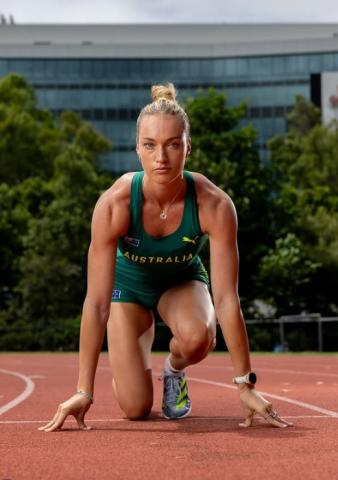
For Gold Coast dual Olympian Ellie Beer, Brisbane 2032 is about much more than the chance to compete on home soil.
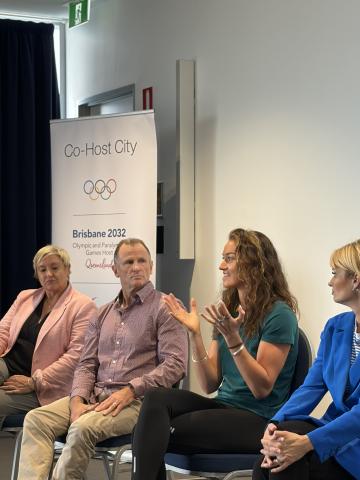
The 24-year-old shared her insights as a panellist at the Games Youth Workshop on Monday, held in Bond University’s Hoog Antink Olympic Room.
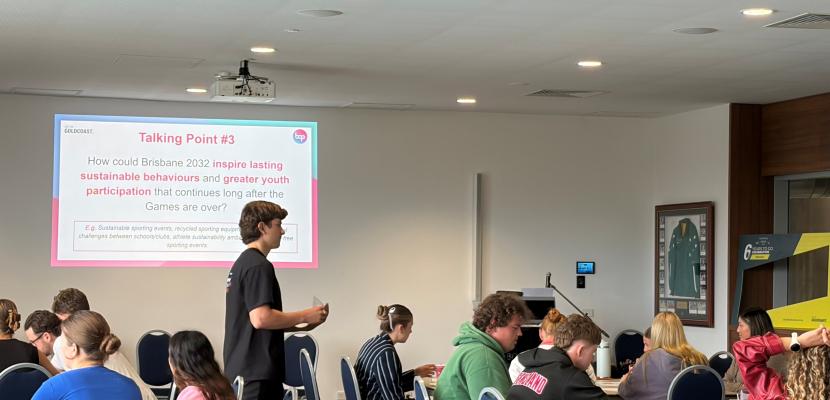
With just six years to go until Brisbane 2032, the City of Gold Coast and Bond University invited guests from schools, universities, TAFE and community sporting groups to have their say on what the Games could leave behind.
Bond University Sport Management and Business academics Associate Professor Lisa Gowthorp and Professor Danny O’Brien joined Beer on the panel.
They spoke with current Bond students and soon-to-be school leavers about how the Olympic and Paralympic Games could create meaningful opportunities and lasting outcomes for their generation.
Surrounded by a collection of Olympic torches spanning generations of Games history, participants were asked to look beyond the sporting spectacle and consider what they want it to leave behind.
For the 400m sprinter, the prospect of competing in front of a home crowd is deeply personal.
“Having my mum, my dad, my family, the Gold Coast community, be there and be a part of my dream is really special,” she said.
But Beer also sees the 2032 Games as something that could create opportunities far beyond athletes who take to the track.
“I think it’s a really big curiosity for me, you might find things within the Olympics – careers that you might not know that you could enjoy,” she said.
“I’ve discovered so many amazing opportunities through getting the chance to travel up to Cairns to meet more of the Olympic Committee.
“It’s really opened my eyes to just how amazing it is, and I’m still discovering that even to this day.”
The panel also discussed employment opportunities that will be created by the Games and its impact on community sport long after the closing ceremony.
Associate Professor of Sport Management Lisa Gowthorp said the University’s sport focus made it a natural setting for a discussion about what a lasting sporting legacy could look like.
“We can have the best shiny stadiums and facilities, but unless everybody in the community can access them, afford to use them and play with their friends, we’re not going to have that,” she said.
The conversation also turned to the challenge of keeping people active long after the Games, from accessibility and regional participation to opportunities beyond traditional organised sport.
City of Gold Coast representative Scott Kruegar, who manages the Games Coordination Branch, said the workshops were designed to understand what young people wanted of their city.
“Our hope is that if we talk to our youth to understand what they want the Gold Coast to be like, then we can see how we can leverage the Games to deliver that,” he said.
Among the contingent taking part was All Saints Anglican School student Zarrah Farrington, who has her sights set on studying sport management next year.
Farrington said hearing Beer speak had given her a clearer idea of where the Games could lead.
“I’d like to get a job around the organising of the Games, and that’s why I’d like to do sport management here at Bond,” Farrington said.
“The Games aren’t just about the athletes, there are so many opportunities and so many people involved behind the scenes.”
Beer knows the power of that inspiration herself.
“I remember going and watching the Gold Coast 2018 Commonwealth Games. I was a real youngster, sitting in those stands and looking at all our athletes perform in from of their home crowd,” she said.
“It inspired me so much to represent my own country.”
With six years to find the 1.3 seconds separating her from the 50-second 400m qualifying mark, Beer is chasing her own Olympic opportunity while showing the next generation there’s more than one lane into the Games.
“I feel like the Gold Coast is turning into the land of opportunities.”