By Dr Sule Gunter and Dr Ro Nogueira
For most athletes, retirement is the final chapter.
For Serena Williams, it appears to be an intermission.
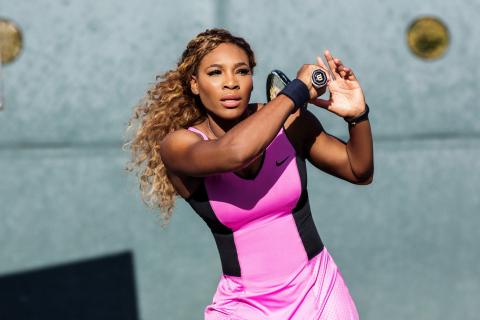
The announcement that the 44-year-old will return to professional tennis after almost four years away has sent shockwaves through sport, sparked excitement among fans and prompted immediate speculation: can she win another Grand Slam?
Perhaps that is the wrong question.
Because even if Serena Williams never lifts another trophy, never makes another Wimbledon final, or never gets that elusive 24th Grand Slam title to equal Margaret Court and Novak Djokovic, this comeback may already be one of the most important moments of her extraordinary career.

Why?
Because Serena’s return has the potential to challenge one of sport’s most stubborn assumptions - that for women, age and hormonal transition inevitably signal the end.
Serena is not simply an athlete returning from retirement. She is a 44-year-old mother attempting to compete again at the highest level of world sport after decades of physical demand on her body.
That matters.
Elite female athletes face unique physiological transitions that historically have been under-researched, under-discussed and too often misunderstood.
Serena had her daughter at 37 and later battled injuries that disrupted the final stages of her career. Pregnancy itself involves enormous hormonal change, and now, at 44, she is approaching the age where many women begin the transition toward menopause.
That does not mean the writing is on the wall.
Far from it.
The average age of menopause is about 51, but symptoms associated with perimenopause - the transition phase beforehand - can begin up to eight years earlier. For some women this can mean disrupted sleep, fatigue, slower recovery, changes in muscle mass and greater susceptibility to injury.
For an elite athlete whose success has been built on power, explosiveness, precision and endurance, those are not small considerations.
But neither are they insurmountable.
Strength, coordination, explosiveness and agility remain highly trainable. Experience matters. Strategy matters. Psychological resilience matters.
And if Serena Williams has built a career on anything, it is resilience.
That is why her decision to begin in doubles appears particularly smart.
Sharing the physical demands of the court reduces the toll on the body while still allowing her to test her competitive edge, movement and match readiness. It gives her the opportunity to rebuild gradually while leaning on the decades of experience that made her arguably the greatest female athlete of all time.
The fact Serena reportedly re-entered anti-doping testing protocols last year also suggests this is not a spontaneous comeback. Preparation has almost certainly been happening behind the scenes.

What fascinates me most, however, is the opportunity this moment presents beyond tennis.
Women approaching midlife are too often told - directly or indirectly - that physical decline is inevitable. That their best athletic years are behind them. That the body becomes something to manage rather than something capable of growth.
Serena’s comeback challenges that thinking.
She is showing women that hormonal transition does not automatically mean the end of ambition, strength or performance. Yes, the body changes. Recovery becomes more important. Strength training matters more. Sleep and nutrition become critical.
But “different” does not mean “finished”.
For women navigating these stages of life, visibility matters. Seeing someone like Serena return to elite sport can be profoundly powerful.
It can also help spark something desperately needed - more research.
We still know surprisingly little about the interaction between high-performance sport and perimenopause. The science is growing, but elite female athletes have historically been studied far less than men.
One reason this conversation has often been overlooked is because elite sporting decline frequently begins before menopause enters the discussion. By the time many athletes reach their 40s, retirement has already arrived, making the debate seem redundant.
But Serena’s comeback raises a broader question. What about women in endurance sports, where experience and pacing can offset raw explosiveness? Or women in professions where physical performance remains essential - the military, emergency services, rescue operations?
These are not niche questions. They affect millions of women navigating a transition that remains poorly understood.
Serena’s comeback shines a spotlight on questions worth asking.
How do women adapt training during hormonal transitions? What changes optimise performance? What role does recovery play? What support structures matter most?
Then there is another human side to this story.
Serena will reportedly return alongside 19-year-old Canadian Victoria Mboko.
By the time Victoria Mboko entered the world in 2006, Serena Williams had already won eight Grand Slam titles and changed women’s tennis forever.
Imagine being a teenager and suddenly sharing a court with Serena Williams - not watching her from the stands, not seeing highlights online, but competing beside one of the greatest athletes the world has seen.
For a young player, that is the opportunity of a lifetime.
And perhaps that, too, says something about Serena’s return.
Legacies are not only measured in titles.
Sometimes they are measured in what becomes possible for the people who follow you.
Will Serena win another major?
At 44, against younger bodies and a faster modern game, it would be an enormous challenge unlike any she has faced before.
But champions are not defined solely by trophies.
Sometimes greatness is about changing what people believe is possible.
And in that sense, Serena Williams may already have won.
Dr Sule Gunter and Dr Ro Noguiera are Assistant Professors in Health Sciences and Medicine at Bond University