
Architecture as a discipline inherently involves far more practical work than it does theory. As an architecture student, although you might learn about varying styles and delve into architectural history, ultimately, it’s all about designing beautiful – and functional – things.
So, when the end of semester rolls around and everyone else is sitting for exams, how is all of your hard work assessed? We spoke to current Bachelor of Design in Architecture student Bella Mulvihill about her experience studying architecture, and asked her to demystify exactly what an exam can look like in this creative and hands-on program.
What does an architecture exam look like at Bond?
Architecture is an opportunity for innovative problem solvers to express themselves through designs that contribute positively to society. So, it’s only natural that architecture study doesn’t follow the same trajectory as biomedical science, law or international relations – instead, it’s driven by big projects and ongoing assessments where students are required to develop buildings and designs for a particular purpose or in a certain style.
As a result, exams are few and far between in an architecture degree. Throughout her Bachelor of Design in Architecture, Bella recalls completing just two exams.
“The two ‘real’ exams I have completed since I started my degree were for a history subject and a structures subject. Instead, our assessment consists of many presentations and assignments – it’s not very common for us to do exams in the traditional sense!” she says.
So, how are students assessed instead?
There are a few key types of assessment that architecture students undertake, all of which are engineered to ensure students get lots of practical experience and chances to apply the niche knowledge they learn each semester across their classes.
“As our degree works best through physical and digital tasks, such as physical and digital modelling, Bond does a really good job of setting assessments that reflect this. It’s something I really love about my degree, as it helps us all to learn as much as we can and to develop our skills to the full extent possible in just two years,” Bella says.
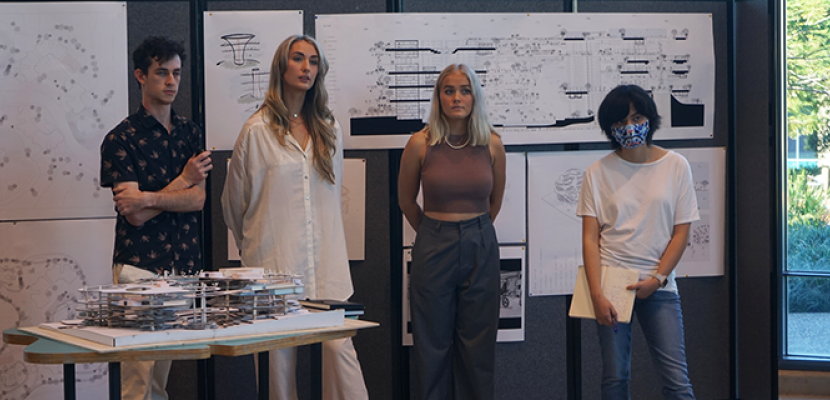
“For studio, our main subject in architecture programs at Bond, the assessment consists of multiple presentations which lead up to and prepare you for your final presentation (End of Semester Critique). You also have to create portfolios to document your progress,” she says.
What is the End of Semester (EOS) Critique?
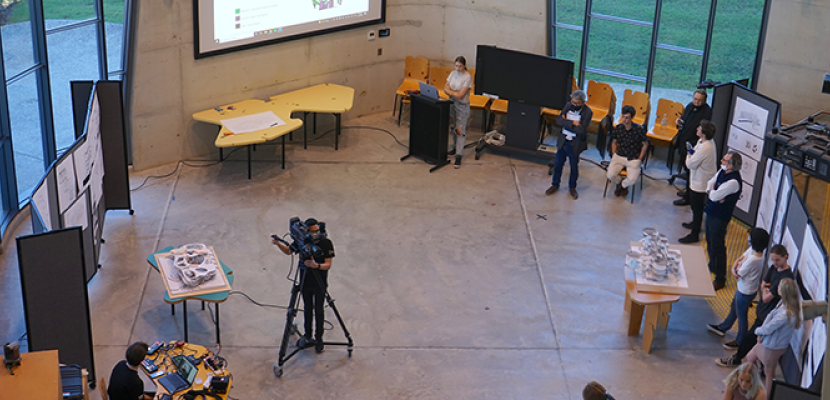
In addition to the challenging array of assessment pieces architecture students must submit throughout their degrees, each semester sees an End of Semester (EOS) Critique take place. Perhaps the most important method of assessment for students at the Abedian School of Architecture, including Bachelor of Design in Architecture, Graduate Diploma in Architecture (Pathway), Master of Architecture and Master of Architecture (Professional) students, these presentations are a chance for you to showcase your work to peers, professors and guest critics.
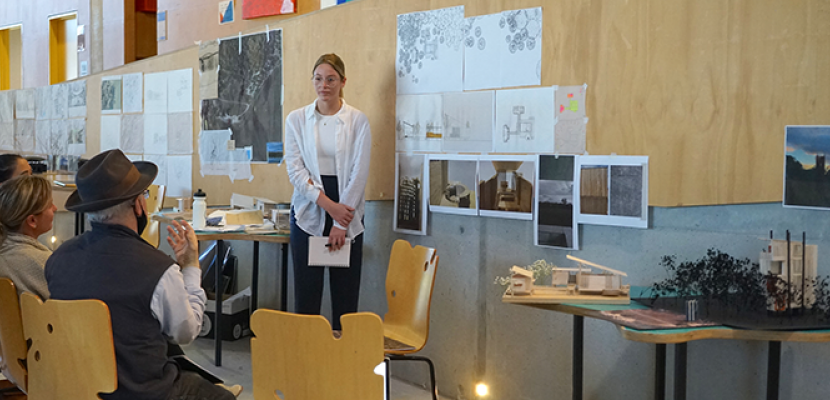
Guest critics provide their commentary on each student’s pitch, which can run from anywhere between five and 20 minutes, depending on the project. The guest critics will ask questions, analyse the design pitch and provide feedback, giving students the unparalleled opportunity to hone their skills further and to learn more about effective communication and public speaking.
What kinds of projects do architecture students get to complete?
Of course, assessment pieces in architecture programs differ from subject to subject, with the aim of putting various architecture-related skillsets to the test – just like any other program might do via a final exam.
“For graphic design we were required to design a business template. For a digital modelling class, we had to design and physically create a custom light fitting, as well as learn how to analyse climate and weather through programs that can then be applied to design approaches in studio,” Bella says.
“Last semester, in a subject called Design and Detailing, we were asked to design and model a Maggie’s Centre [cancer care centres used in the UK that are designed by prolific architects and artists]. There are also technical assessments, such as one I completed last semester that tested our knowledge in Revit and Grasshopper, two popular digital modelling programs,” she says.
It’s clear that architecture assessments are diverse, exciting, and often the culmination of many months’ worth of hard work. Students can develop their approach over the course of a semester, ultimately graduating with a huge portfolio of designs, skills and technical creations that prove their competence as a future architect.
“My favourite project that I’ve worked on so far was definitely the Maggie’s Centre task. We were afforded so much freedom to how we approached our design, and as I’m very interested in furniture design, this was an exciting component for me,” Bella says.
What’s the best part of studying architecture at Bond?
Bond University architecture students have access to state-of-the-art facilities within the Abedian School of Architecture, and learn from the best academics with a wealth of real-life industry experience.
“I couldn’t imagine myself studying architecture anywhere but Bond. The lecturers are amazing, and so are the facilities! We get our own desks to decorate and occupy throughout our programs, and the workshop within the Abedian building holds everything you could possibly ever need to complete your projects,” Bella says.
“As for my favourite part about studying at Bond, it would definitely be the small class sizes. This way, you really get to know your lecturers, and can develop a lasting relationship with both them and your classmates. Designing can sometimes be really challenging, so having the chance to sit down with your lecturers for an essentially unlimited amount of time is really helpful.”
Although it might not follow the same traditional structure of many degrees, that’s what makes architecture the perfect outlet for creativity, problem solving and lateral thinking – something that is nurtured throughout our range of architecture programs here at Bond. You’ll graduate with a well-crafted perspective of not just design, but the technical and creative skills required to succeed and take the industry by storm.